
Monday, 1 August 2016
Saarah Survé
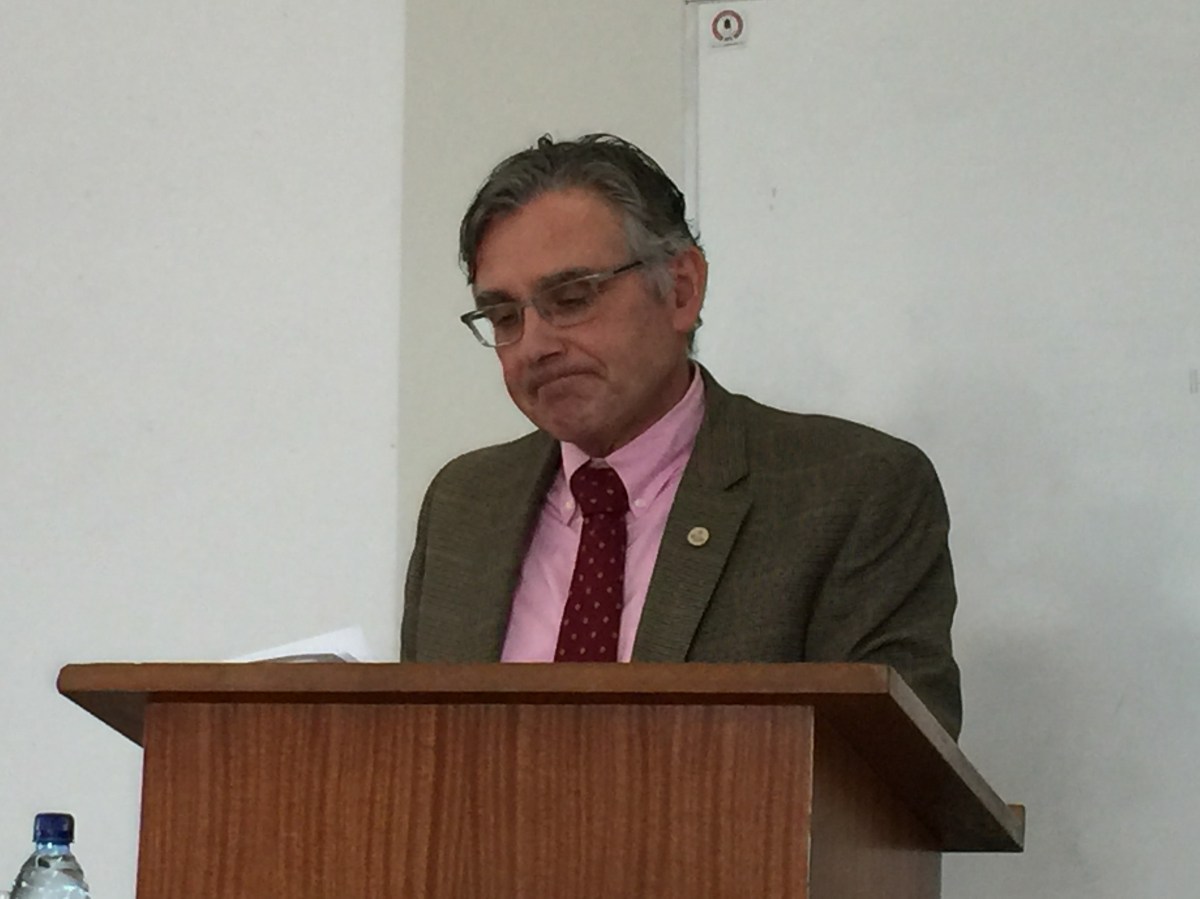
Stellenbosch University – In just one year at Stellenbosch University (SU), the vice-chancellor, Professor Wim de Villiers, has experienced five of the six main areas of student protests.
These include tuition, rape culture, black lives matter, decolonisation of the university and outsourcing and insourcing.
“I didn’t know what I was signing up for when I became vice-chancellor,” said De Villiers, as he addressed honours students from SU’s journalism department. “There is no textbook on how to handle student protests.”
De Villiers, who started his new position on 1 April 2015, said that his time at SU has been complex and challenging, but very rewarding. He joked with the students that perhaps he should not have started on April fool’s day.
De Villiers, who is a doctor, said that his background in medicine helps him to deal with the complex issues that he faces at SU.
At one stage last year, De Villiers had to stop using social media, because of a hashtag that was making the rounds (#WimdeVilliersmustdie). He said that such a hashtag does not promote useful discussions, but that he is willing to engage with students.
When asked about transformation at SU, he responded by saying that “transformation is a complex issue”. He also said that transformation is a word which has lost all meaning. De Villiers does believe, however, that the university is being transformed.
De Villiers also addressed the issue of fee increases. Although De Villiers noted that students have been fairly quiet at the university lately, he is aware that an increase in tuition, which is inevitable, could spark more protests. “We cannot afford free education for all. As a country, we are not economically developed enough.”
De Villiers said that a sustainable university needs fee increases, but alluded to the poor being exploited in the event of no increase. “All that a 0% fee increase means is that the rich get a massive bargain and the poor suffer… It’s a perverse system.”
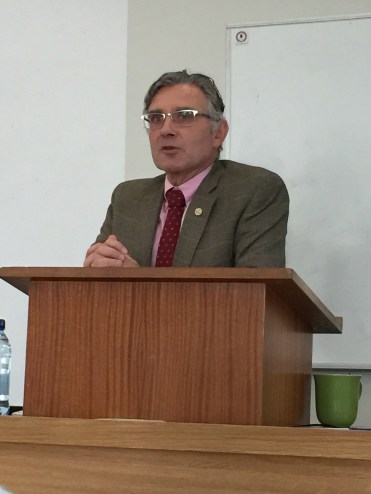
De Villiers’ advice to his successor would be to communicate. He said that whenever he thought he had communicated enough, he realised that he had not.
 Saarah Survé