PHOTO STORY
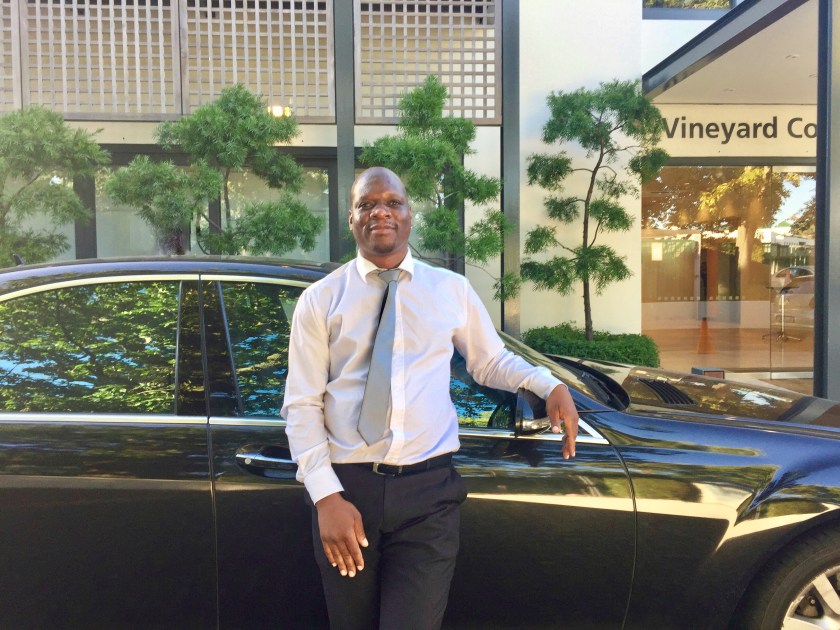
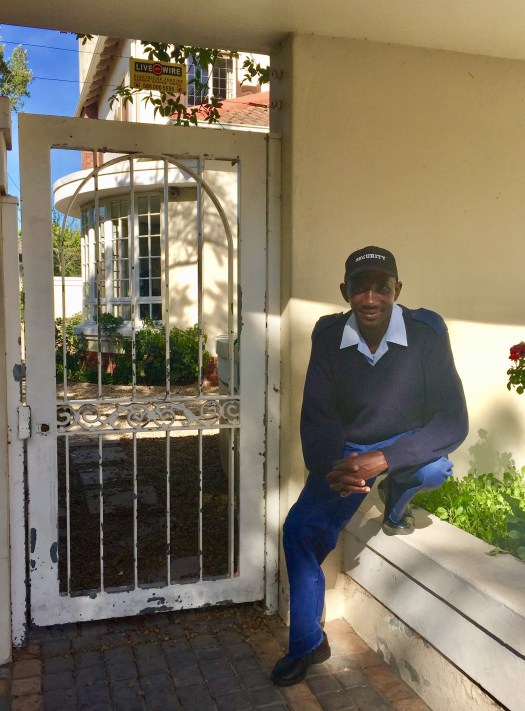
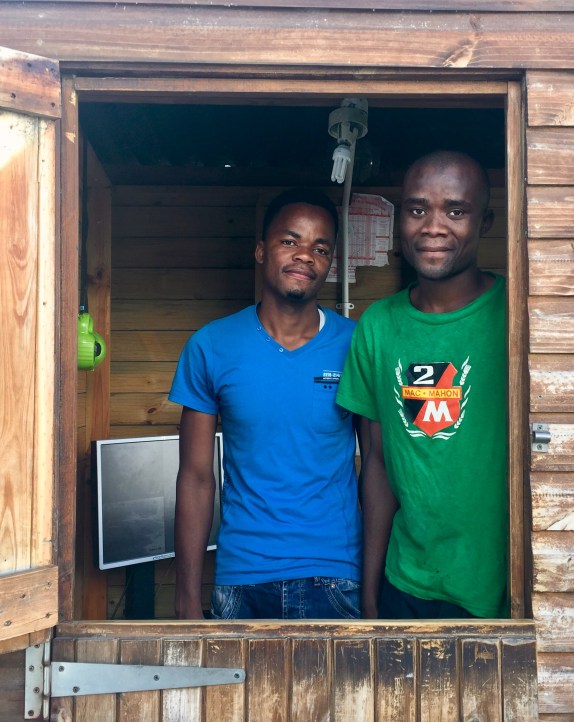
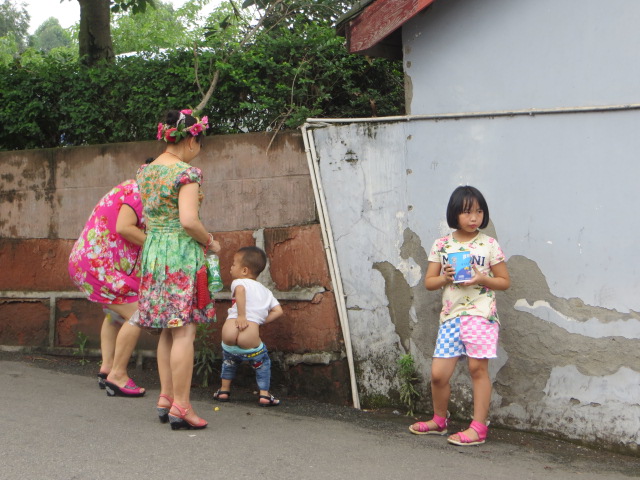
Malawians of Cape Town
From Mangochi to the Mother City



NEWS

PORTRAITS

FEATURES

From Mangochi to the Mother City
21 September 2016
Stellenbosch – Stellenbosch University’s netball team have won the last three rounds of the Varsity Cup season and Coach Christine Behan believes they can make it to the finals.
“I definitely believe we will make the semis as we should finish in the top four, but whether we go all the way to finals again depends on who and where we play the semis. That is our goal though and I believe we can do it. We have a great team and if our shooters are accurate, we are hard to beat,” said Behan.
Maties scored five consecutive goals within the first two minutes of Monday’s game against the University of Cape Town (UCT). Behan said it was their goal to lead 5-0 and start strong. Maties beat UCT 69-25.
Captain Juline Rossouw (24) attributes Monday’s success to sticking to the game plan. “It’s something that we have struggled with in the last few games. It was great getting it right in front of our home crowd. It’s very important to make a statement on court from the start. Nobody wants to start on the back foot.”

Maties will play the Vaal University of Technology (VUT) on Monday 26 September at 18:00 at Coetzenburg Indoor Centre.
“This will be a very important game for us to get up our scoring average, which might count in our favour going forward in this competition,” said Rossouw, who plays goal defence.
She added that the game against VUT will be a good opportunity to showcase some of the team’s younger players.
Behan said that the team will use the game to practise combinations that they want to use against the University of the Free State.
Maties play Kovsies on Thursday 29 September at Coetzenburg Indoor Centre.
“It will be our most difficult match, because that result will determine where we finish on the log and who we will play in the semi-finals. It’s a very important and a crucial match for us. We are still hoping for a home semi-final too,” said Behan.
North-West University’s Pukke beat Maties 50-37 in 2015’s final. Despite this, Behan has made minimal strategic changes this year.
“Once we know who we will play in the semis we will analyse that team and train according to our specific game plan for that specific match.”
13 September 2016
Stellenbosch University – Professor Nyameko Barney Pityana (71), professor emeritus of law at the University of South Africa and president of the convocation at the University of Cape Town, said South Africa is missing out on a society of intellectuals and the promotion of a thinking society, without black consciousness.
“Why is it that there is so much interest at an intellectual level in Steve Biko, but very little evidence in society in general and public life of his influence?” asked Pityana, as he addressed students and staff at Stellenbosch University (SU) on Tuesday, the day after the anniversary of Steve Biko’s death.
Pityana was a founding member of the South African Students’ Organisation and an important figure in the Black Consciousness Movement with Biko.
Pityana said that he wished black consciousness was becoming a tool for conversation and for understanding South African society today. “I wish it was a tool for framing much of what we are doing in South Africa today, for framing the new humanity which we are pursuing and what our constitution is actually about, for recognising that there is no future in the unequal society that we are today. There is no future in a society that has large numbers of poor people. There is no humanity in a society that is racist.”
Pityana said that neo-colonialism, neoliberalism, individualism and greed have destroyed the humanity of South Africans.
“The current government of the African National Congress lacks an intellectual frame in which it can move South Africa forward,” said Pityana, who, in an open letter written in 2013, asked President Jacob Zuma to resign.
“Black consciousness could affect leadership and values. It would provide leadership with tools for assessing what the appropriate values that we need in our society are.”
Pityana noted that there is “a growing influence and articulation of black consciousness, a growing readiness on the lips of many, particularly young people and scholars, and a growing number of studies that are being done on Steve around the world.”
Biko’s grandson, Avela Biko (19), who is in his first year of a Bachelor of Arts degree at SU, was also in attendance. He said that, as a young South African, it was overwhelming growing up with the knowledge that Steve Biko was his grandfather. “I never got the chance to meet him. It was always hard to hear things about him, but it’s been a pleasure growing up, getting more information and getting to know him. It’s a privilege to be his grandson, because he did a lot for the country and his influence is still felt today.”
See more of Pityana’s presentation below:
Monday, 1 August 2016
Saarah Survé
Stellenbosch University – In just one year at Stellenbosch University (SU), the vice-chancellor, Professor Wim de Villiers, has experienced five of the six main areas of student protests.
These include tuition, rape culture, black lives matter, decolonisation of the university and outsourcing and insourcing.
“I didn’t know what I was signing up for when I became vice-chancellor,” said De Villiers, as he addressed honours students from SU’s journalism department. “There is no textbook on how to handle student protests.”
De Villiers, who started his new position on 1 April 2015, said that his time at SU has been complex and challenging, but very rewarding. He joked with the students that perhaps he should not have started on April fool’s day.
De Villiers, who is a doctor, said that his background in medicine helps him to deal with the complex issues that he faces at SU.
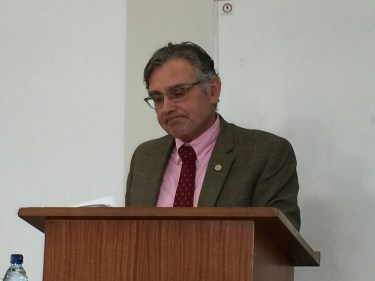
At one stage last year, De Villiers had to stop using social media, because of a hashtag that was making the rounds (#WimdeVilliersmustdie). He said that such a hashtag does not promote useful discussions, but that he is willing to engage with students.
When asked about transformation at SU, he responded by saying that “transformation is a complex issue”. He also said that transformation is a word which has lost all meaning. De Villiers does believe, however, that the university is being transformed.
De Villiers also addressed the issue of fee increases. Although De Villiers noted that students have been fairly quiet at the university lately, he is aware that an increase in tuition, which is inevitable, could spark more protests. “We cannot afford free education for all. As a country, we are not economically developed enough.”
De Villiers said that a sustainable university needs fee increases, but alluded to the poor being exploited in the event of no increase. “All that a 0% fee increase means is that the rich get a massive bargain and the poor suffer… It’s a perverse system.”
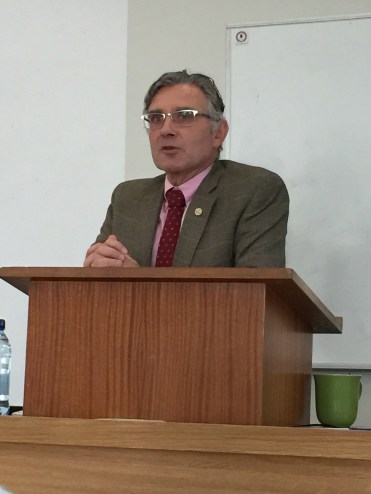
De Villiers’ advice to his successor would be to communicate. He said that whenever he thought he had communicated enough, he realised that he had not.
6 April 2016
Saarah Survé, Stellenbosch Department of Journalism
Stellenbosch University – Irene primaria, Lize-Mari Doubell, and Majuba primarius, Hein Stegmann, have collaborated to change male students’ perceptions of females, after degrading posters were placed around Majuba residence last week.
A first-year student on Majuba’s social committee put up degrading posters advertising a social event with the women’s residence, Irene. Doubell, head of the women empowerment task team, was notified and immediately cancelled the social.
“We had to think carefully about our next move,” said Doubell. “Reporting a residence to the university’s Equality Unit is the normal route that is taken when there is a case of discrimination, gender inequality or objectification, but we wanted to engage with Majuba.”
Doubell explained that Irene did not want to take disciplinary action, because behaviours would not have changed through disciplinary action alone. “All that Majuba would have to do is tick the boxes; apologise, appear before the committees and panels and be banned from a social event.”
“We decided to work with Majuba to combat rape culture and the objectification of women. For first-year students to think that it is okay to make degrading posters about women, speaks to a greater culture of what residences and men allow. Residences are normalising the objectification of women,” said Doubell.
Doubell said she told Majuba’s house committee members that Irene wanted to see tangible change take place in Majuba’s culture. “It’s about more than one poster; it’s about changing the culture of men’s residences on campus, and creating a positive impact.”
Stegmann said that Irene’s decision not to report them has been a massive blessing. “When you are reported, it feels like all you are trying to do is defend yourself. You start in a defensive mind-set. But as soon as someone is willing to work with you, you know that their intentions are good.”
Stegmann said it has been a whirlwind week for Majuba with many conversations, group discussions, education and progression.
“In my four years in Majuba, we have never had critical discussions about women empowerment and gender equality.
“First the guys said that maybe Irene was too sensitive, but then they started asking questions; how do we feel, is it offensive, and what is the problem,” said Stegmann.
“I saw them click. They realised they have to change. This situation has been a call for not only Majuba men to step up, but all men,” said Stegmann. “It is a dark cloud with a silver lining. It’s our image that is being made an example of, but in the long run, it’s for the good.”
The two residences had an optional rape culture talk on Tuesday night, with about 90 Majuba men out of 150 present. Doubell said it was evident that rape culture was a new concept for a lot of them.
“There was a lack of understanding, and it is clear that there is a gap in men’s education.”
However, Doubell said that the men were open to the idea. “They didn’t take a defensive stance. They are tackling the issue head-on, and I think that’s what will make a huge difference.”
Doubell said that there is still a lot of work to be done on both sides. They have asked Majuba to consider being the first men’s residence on campus to have a women empowerment portfolio on their house committee.
Next on their agenda is a meeting with the heads of all 44 residences and private student organisations.
30 March 2016
Saarah Survé, Stellenbosch Department of Journalism
Stellenbosch – KeenMind, a natural alternative to medications like Concerta and Ritalin, is flying off the shelves at the Eikestad Mall pharmacy in Stellenbosch, according to Michael du Preez, who supervises the pharmacy’s vitamin laboratory.
KeenMind claims to improve mental performance.
“It is our biggest seller at the moment as more students move towards a more natural option. We recommend it, because students don’t need a script to buy it and it doesn’t cause a crash, like Concerta and Ritalin, which you do need a script for,” said Du Preez, a biochemist.
Du Preez advised students to skip a weekend of partying and invest in their health instead, which will in turn benefit their education, as they will be able to concentrate better.
“In relative terms, these supplements are not expensive; R205 to R250 for a month’s supply is a tiny price to pay for delayed gratification.”
Du Preez said that KeenMind can work as quickly as three to four days. He added that no serious side effects have been recorded.
Du Preez has first-hand experience with Ritalin, as he was prescribed the drug at age 13. He says that it changed his character. “You become subdued. It’s like a tranquiliser.”
Similarly, Jacques Booyens, a Stellenbosch University (SU) graduate, began using Ritalin at the age of eight. He stopped this year and is studying for the first time without any medication.
Booyens admitted to trying a few natural products for focus, but felt like a lot of them were “just snake oil.”
De-Ann Snyders, a Stellenbosch student in industrial engineering, was also diagnosed with ADD and has been on Concerta for two years.
Snyders said that she tried Bio-Strath, a daily herbal nutritional supplement, but that taking the medication became too much administration for someone with ADD. “It took four days to get into my system and I had to take six pills a day. As someone with ADD, I don’t understand why people want this drug so much.”
“It’s also expensive (about R460 for 300 tablets) and made me very agitated. I felt like a zombie,” said Snyders. “If you don’t need it, stay away. It will help anyone concentrate better, but once you realize that it helps, it can become addictive,” she warned.
Du Preez said that it is important for students to know that there are natural options available, like KeenMind, which doesn’t have negative side effects. He asked students to consider these before they take other medications, such as Ritalin and Concerta.
28 February 2016
Saarah Survé, Stellenbosch Department of Journalism
Stellenbosch University – Lovelyn Nwadeyi, a Stellenbosch student from 2010 to 2012, has called on South Africans to reclaim their collective humanity, histories and languages so that their children will know the truth about themselves.
Nwadeyi addressed former and current students, as well as fulltime academic staff members, at the annual meeting of the Stellenbosch University Convocation on Thursday.
Nwadeyi is the youngest black woman to address the SU Convocation. Her speech reflected on the differences of the Stellenbosch she attended and the one that exists today.
Fighting back emotion, she explained that it is difficult for her to talk about courage and compassion. “The rainbow nation ideal promised… in 1994 is becoming an ever-distant one,” she said. Nwadeyi added that “perhaps we are realising that there was no rainbow to start with.”
“South Africans are now faced with the task of looking into the mirror, and asking themselves what is happening around us and why does it feel this way?” said Nwadeyi, who is cautiously questioning what is new about Stellenbosch and South Africa.
“Something is brewing in South Africa… I know it is irreversible and will continue to brew and boil over whether we give it the permission to do so or not,” she said.
“Stellenbosch is not exempt from the winds of change that are blowing through this country,” said Nwadeyi. She also stated that Stellenbosch is responsible for many of the inequalities that South Africa faces today.
Nwadeyi said that the difference between South Africa and Germany is that the Germans are genuinely sorry about the past and have written off that part of their history as unequivocally bad, whereas South Africans are nostalgic for the good old days.
“We must dismantle this inhumanity that we are all products of, by reclaiming our collective humanity…and our languages,” said Nwadeyi.
While addressing the convocation, Nwadeyi slipped effortlessly between English and Afrikaans, illustrating her point that there are many faces to Afrikaans as a language and a culture.
She ended her speech with the hope that one day it would not be necessary for her to talk to her children about racism and sexism. “That is really my dream for South Africa, and Africa as a whole, but for us to get to that point, we need to know about the roles we need to play,” she explained.
“None of us get to claim an easy victory, because there is no victory in our collective pain, there is only closure… which South Africa desperately needs,” said Nwadeyi.
At the convocation, five new members were elected onto Stellenbosch University’s executive committee. According to City Press, Nwadeyi was a candidate for the position of vice-chair on the committee, but lost by 15 votes. None of the 5 black candidates were elected.
James de Villiers, Head of Communication of Stellenbosch University’s Student Representative Council, said that Stellenbosch University’s Convocation was disappointed in the result of the meeting.
“They had a chance to vote for a truly transformed statutory body that represents Stellenbosch’s changing demographics and needs, but chose not to.
“The Convocation chose to remain within the boundaries of what is comfortable and, in real terms, regressed in its representation of diversity and much needed transformation,” said De Villiers.
De Villiers said it is concerning that Breyten Breytenbach, South African poet and writer and the second speaker at the convocation, “represents a bygone era, where the university represented one culture, one race and one language.”
Nwadeyi has a Master’s Degree in Peace Studies and Conflict Resolution from Uppsala University in Sweden.

 Saarah Survé