Moonisah Namata was born in Cape Town, South Africa, to Malawian immigrants. A year ago, her parents took her back to Malawi to live with her aunt and uncle.
The Mother City to Mangochi
Four years ago, I interviewed Oscar Haj Namata (45), a Malawian who had been living and working in Cape Town (the Mother City) since 1996. At the time of the interview, Oscar and his wife, Mabel, expressed the wish that their two-year-old daughter, Moonisah, would have a better future in Cape Town, where she was born. Recently, I discovered that they had sent Moonisah (now age 6) to Malawi to live with Mabel’s sister.
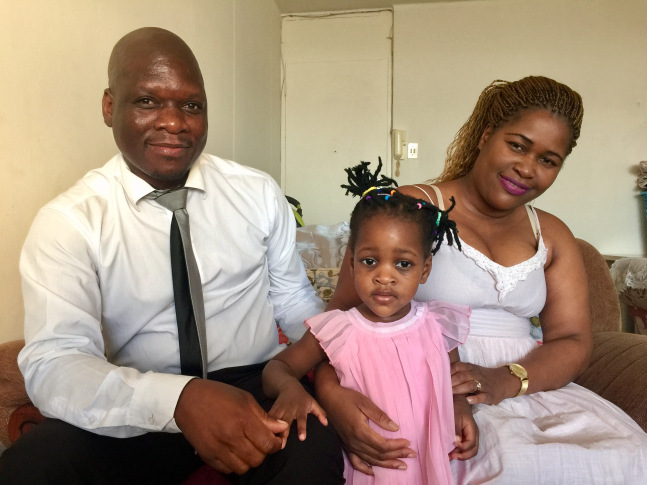
Oscar and Mabel with their daughter, Moonisah, age 2, in Cape Town, South Africa, 2016
Both Oscar and Mabel are employed at the same company as driver and receptionist, respectively. As driver to the CEO, Oscar’s hours are unpredictable, and it was becoming difficult for him to fetch Moonisah from school, and public transport in Cape Town can be unreliable and unsafe. The decision to send her home was not made lightly, as Oscar explains:
“Sometimes I had to leave her alone in the house and run back to the office quickly before anyone noticed. That was not easy for us. Anything can happen and we always find out too late and we cannot blame anyone.
We had no choice but to send her home.”
Oscar Haj Namata
The last time Oscar saw Moonisah was in September 2019 in Malawi. Mabel’s sister decided it would be best for them not to communicate with her for the first three months so that she could adjust to her new life. “She didn’t know where we were until we gave her the first video call. She didn’t say anything. The tears were just dropping.”
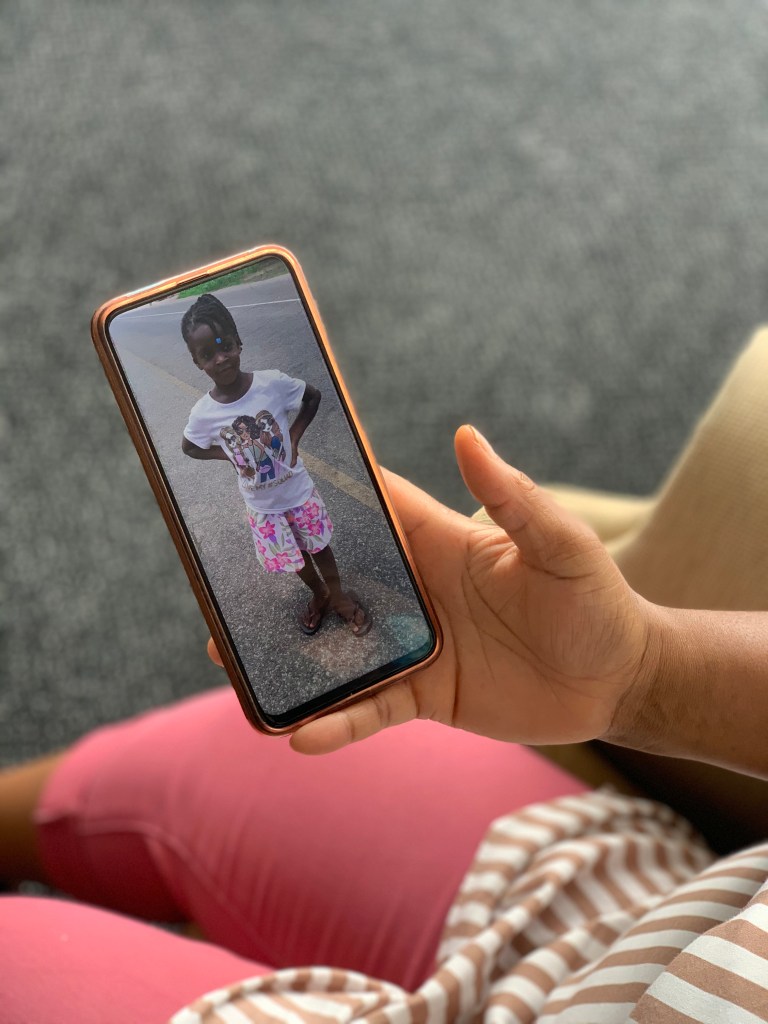
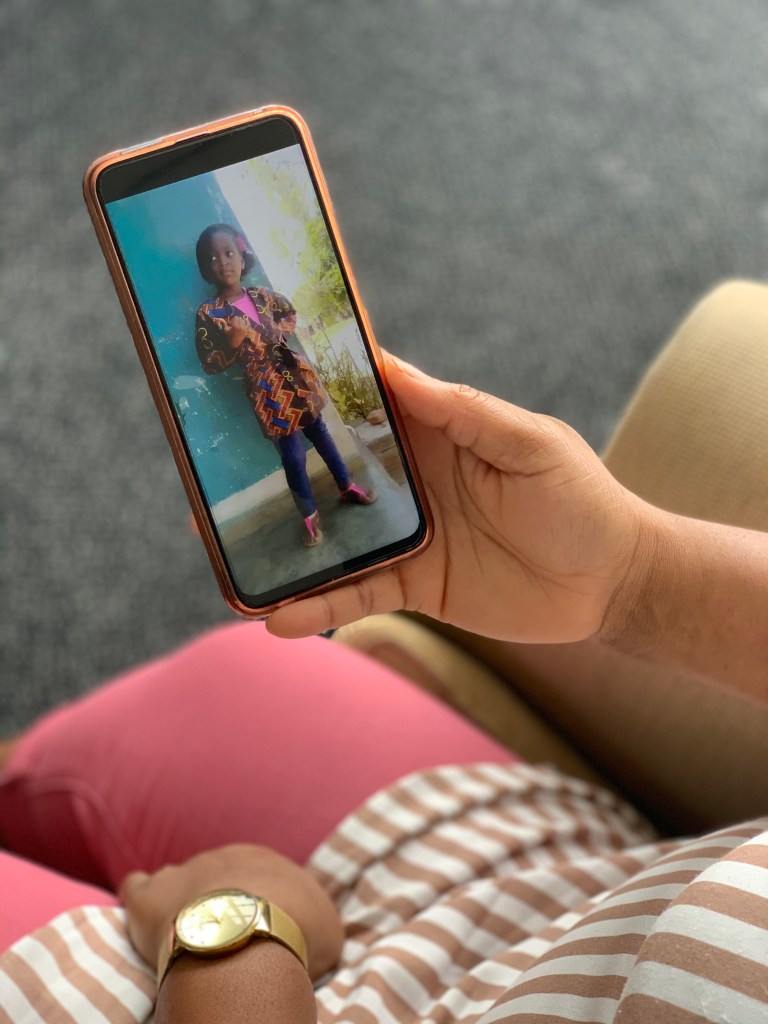
Mabel looks at photos of Moonisah, now age six, Cape Town, South Africa, 2020
Now they speak almost daily on WhatsApp via voice notes. Moonisah speaks English to them, because she thinks that her parents don’t understand Chewa. Although it is difficult for them to be away from her, they believe that she is safe and well-looked after, since Mabel’s brother-in-law is a school teacher and they live on campus.
Oscar will be visiting Moonisah in December. She is excited for his visit and the South African chocolates and ice cream that he will bring. He wants her to return to South Africa in a few years’ time when “she can take taxis by herself”.
Although Moonisah was born in South Africa, she is not a citizen. According to Oscar, her birth certificate shows she is a foreigner, but he hopes that “one day she will be able to go to Home Affairs and get that citizenship”.
In 1995, Oscar Haj Namata first travelled to South Africa from Malawi as a teenager to sell curios. Twenty-five years later, he has lived through five South African presidents.
Mangochi to the Mother City
In 1995, Oscar Haj Namata frequently travelled from Malawi to South Africa with his uncle to sell curios. His uncle had encouraged the then 19-year-old to get a passport so that he could learn the business. “His focus was on showing me … the routes to take, how it works on the borders … to open my eyes. That’s why I stuck with him,” explains Namata. However, when Namata met up with school friends who had settled in Johannesburg, he aspired to their lifestyles. When he saw the small black and white televisions in their rooms, he says that he knew that was what he wanted, but he was not earning much working for his uncle.
“At the end of each trip, his thank you was LUX soap or tea bags. It was never money. Soap, soap, soap …” Namata laughs. He decided to work in South Africa on his own terms and moved to Cape Town (the Mother City) from Mangochi. “The place I was feeling safe and where I would be welcomed was Cape Town with my sister.” Namata worked in a grocery store for a few years, before becoming a driver.
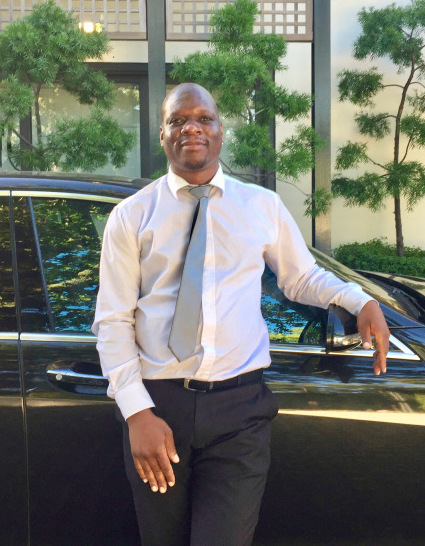
Oscar Haj Namata in Cape Town, South Africa, 2016
Namata was born Haj Namata, but chose the name Oscar when he was in primary school. “I remember very well … like yesterday (he laughs). My close friend, who was in high school, thought I resembled someone he knew called Oscar. He wanted to call me Oscar. I liked it immediately. I changed everything. I used it until people didn’t know my other name, Haj. Only my parents. Haj comes from my great-grandfather. My father’s surname is Namata Haj. I found it [Haj Namata Haj] awkward … it didn’t sound nice. That’s why I was so quick to accept the other name. Oscar Haj Namata. I take all of them. Officially changed. Everyone knows Oscar.”
Although Namata has been in South Africa for 25 years, he sees himself retiring in Malawi. “I cannot think [about it] twice. One day, I know I will get tired and mature. I will … need to go home and do something else, whatever it is. If there is money, I can decide to start something. Maybe in the next five years. That’s only a wish. I’m not really sure. I will be 50. It’s time for retirement.”
For now, Namata is very happy in Cape Town. “You see, I had no this (points to his stomach). I always remember my first time I came, I weighed 52 or 56 kilograms. Now I’m talking about 100 [kilograms]. That means I’m happy. The stress is very little.”
Namata prides himself on understanding Xhosa. “The belief is that when you are staying in a foreign country, you must try to adopt certain languages. Just a little bit. In order for them to welcome you. Even if it’s just greetings: Molweni (hello), kunjani? (how are you?). It helps. I believe that.”
Namata counts on his fingers that he has been in South Africa for five presidents: “Mandela, Mbeki, Motlanthe, Zuma and Ramaphosa. I wish I had nice documents, so that I could tell you straight away: ‘I’m here to stay’.”
Oscar Haj Namata in Cape Town, South Africa, 2020. Photographs of Nelson Mandela are behind him.
I asked Namata if he eventually bought his own black and white television. “I have more than that. I came to South Africa when there were no cell phones. If there was, only certain people had. After I got my first cell phone, I immediately wanted to go home … Thinking I had everything (laughs).” He recalls that it was a Nokia with an aerial. “I can even remember the ringtone (sings ringtone). Now I’m not talking about TVs and small things. I want a Toyota bakkie. One day, when I go home, I can drive to Malawi and put whatever I got in the bakkie and go.”
Cape Town – Pupils forced to write their matric exams in languages other than their mother tongue are put at a distinct disadvantage, leading to lower scores on their papers, according to UWC’s linguistics department head.
Professor Bassey Antia said the Department of Basic Education (DBE) should invest in more teachers, moderators and invigilators who speak African languages in order to administer examinations across more diverse languages than just English and Afrikaans.
“In classrooms, learners are often taught in more than one language.
“It is therefore somewhat unnatural for such learners to be tested in only one of these languages, especially when it is the weaker of their languages,” he said.
“Speakers of African languages, in particular, score the lowest since their languages are not used in examining content subjects.
“The language of the exam paper itself should not be a challenge; the content of the paper should.
“When results are released everybody says the performance is dismal and the language question tends to be dismissed.
“I say we should look at it differently, because the environments are multilingual and learners acquire knowledge across languages. However, when it comes to assessment, learners are tested in one language, the official language.”
The DBE said it does not have enough teachers to teach indigenous languages and therefore cannot administer exams in African languages.
Department spokesperson, Elijah Mhlanga said the DBE embarked on an initiative aimed at bringing indigenous African languages into mainstream education, but it has yet to bear fruit.
“We implemented the Incremental Introduction of African Languages policy in 2014 which was aimed at forcing all schools in South Africa to offer at least one African language.
“At the end of the pilot we learned there was a shortage of teachers in this area.
“We have started to attract teachers using a variety of measures aimed at increasing the numbers and thus grow African languages in our schools.
“As things stand, we don’t have enough people that work in this area of our system and that is what we need to do first before we can administer exams in African languages.”
Antia conducted a study which found students who registered to write matric in English and who know both matric exam languages (English and Afrikaans) would flip their exam papers over to read the Afrikaans side if they did not understand the term in English, and vice-versa.
His study, which started in 2013 and is ongoing, includes 119 students from different language groups.
“Terms in one language can be more descriptive than in another language,” said Antia.
“There is knowledge embedded in terms.
“Knowing several languages can afford different entry points to understanding.”
Antia hopes to present his research to the DBE once it has been published.
Cape Town – When you combine the sounds of South Africa and India, one cannot predict the end result.
The answer lies in the combined sound of Deepak Pandit, Ranjit Barot and Marcus Wyatt.
“The idea is that it should be blending nicely… The idea is that two different musics when played together should sound like one piece of music,” said Pandit, at a press conference for the Cape Town International Jazz Festival on Thursday.
Wyatt joined in on this point and added, “It’s not super easy because stylistically we come from quite different worlds.”
They have been rehearsing for a few days and what they have found is a commonality.
“I believe the point of this (collaboration) is to have some sort of ‘cross-pollination’ of sound and style from the two countries.”
Wyatt reiterated that this is easier said than done. “Some styles of music blend easier than others and I have always been a musician that is up for a challenge.”
Barot chimed in: “I think it all begins with a willingness to have a dialogue… I think that there is a place where all people, all cultures, all genders meet. It’s a neutral, magical place where you stop defining yourself by everything that has been imposed on you in this life. “
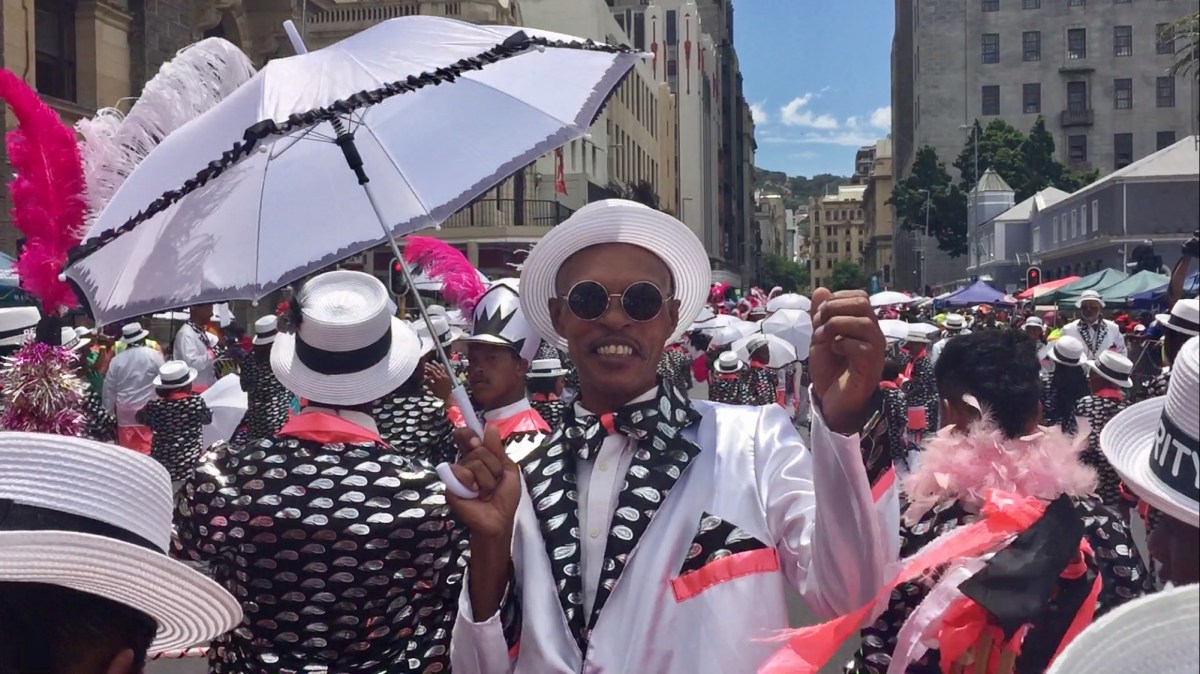
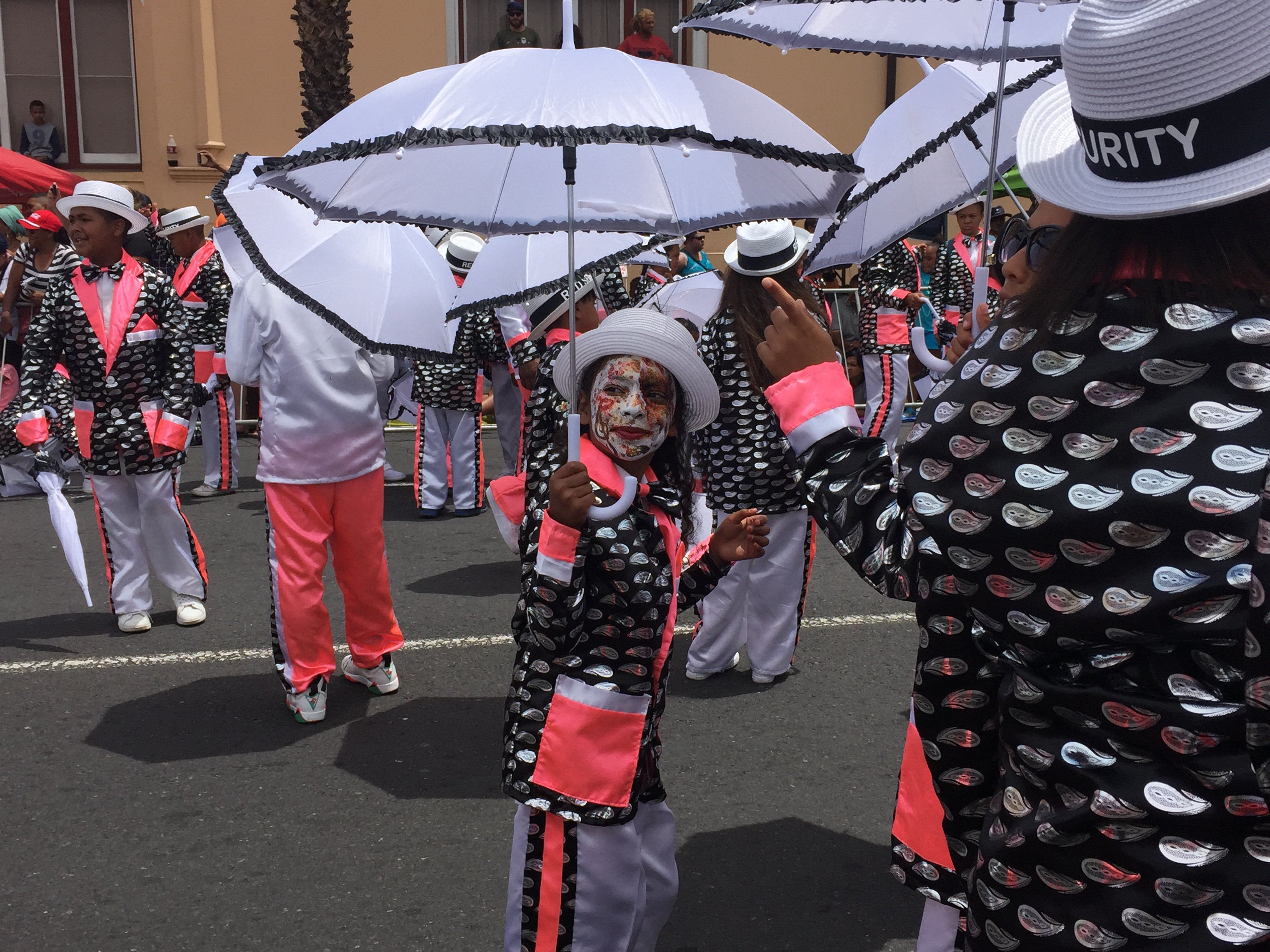
I had no idea what to expect on my first day at the Cape Argus, but was pleasantly surprised when I was tasked with covering the Tweede Nuwe Jaar minstrel march. The march takes place every year on the 2nd of January and has its traditions in slavery in the Cape.
In the nineteenth century, slaves in Cape Town were given one day off in the year (2 January). On this day, they dressed in fancy costumes and sang and danced through the streets. Some of those songs can still be heard at the parade today.
All of the photos below were taken by me.
All set up for the march at the Grand Parade.
Waiting patiently for the minstrels at the Grand Parade.
The Original District 6 Hanover Minstrels were the first troupe in the procession. They have been the champions for the past nine years.
A member of the Original District 6 Hanover Minstrels.
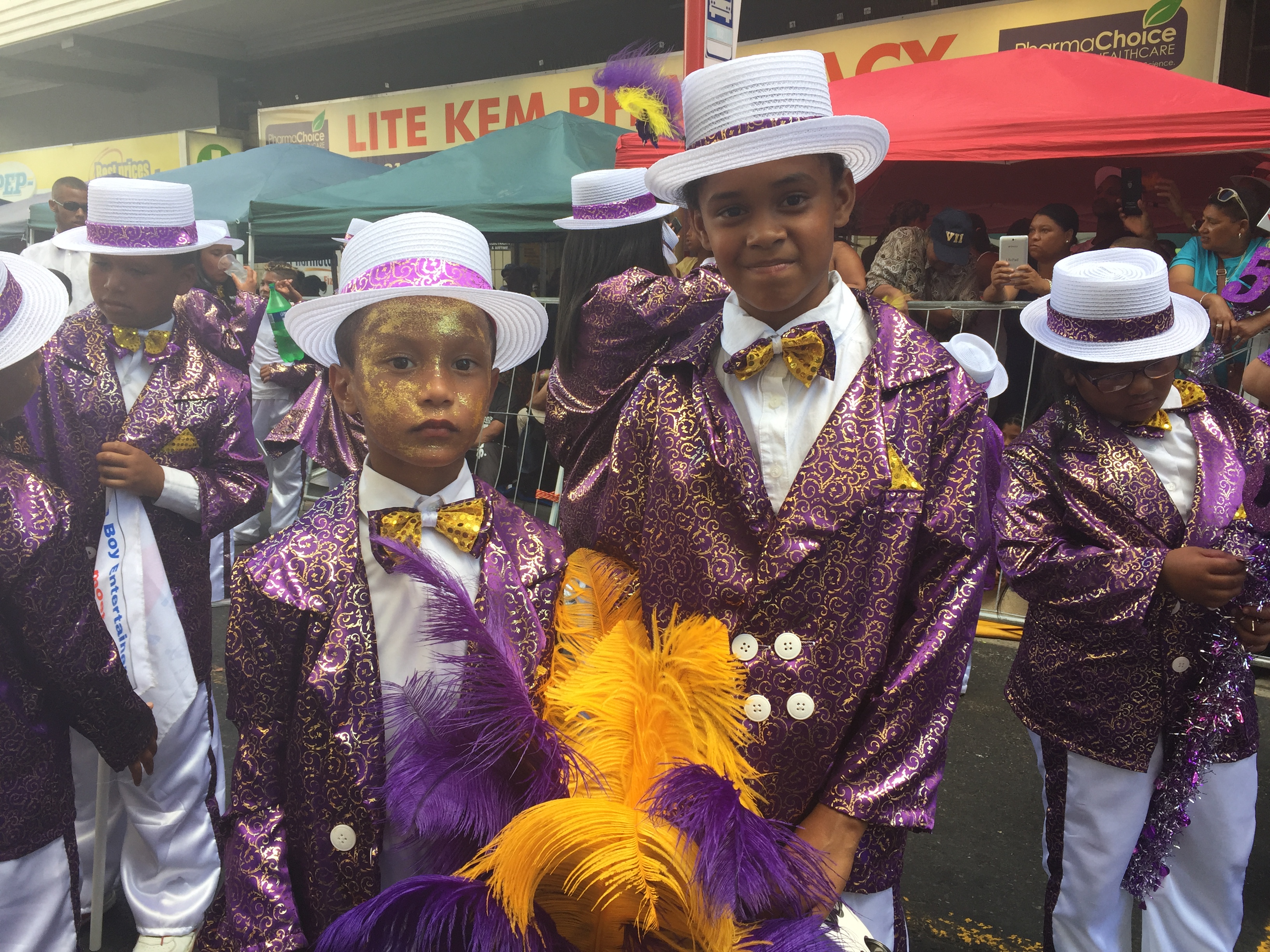
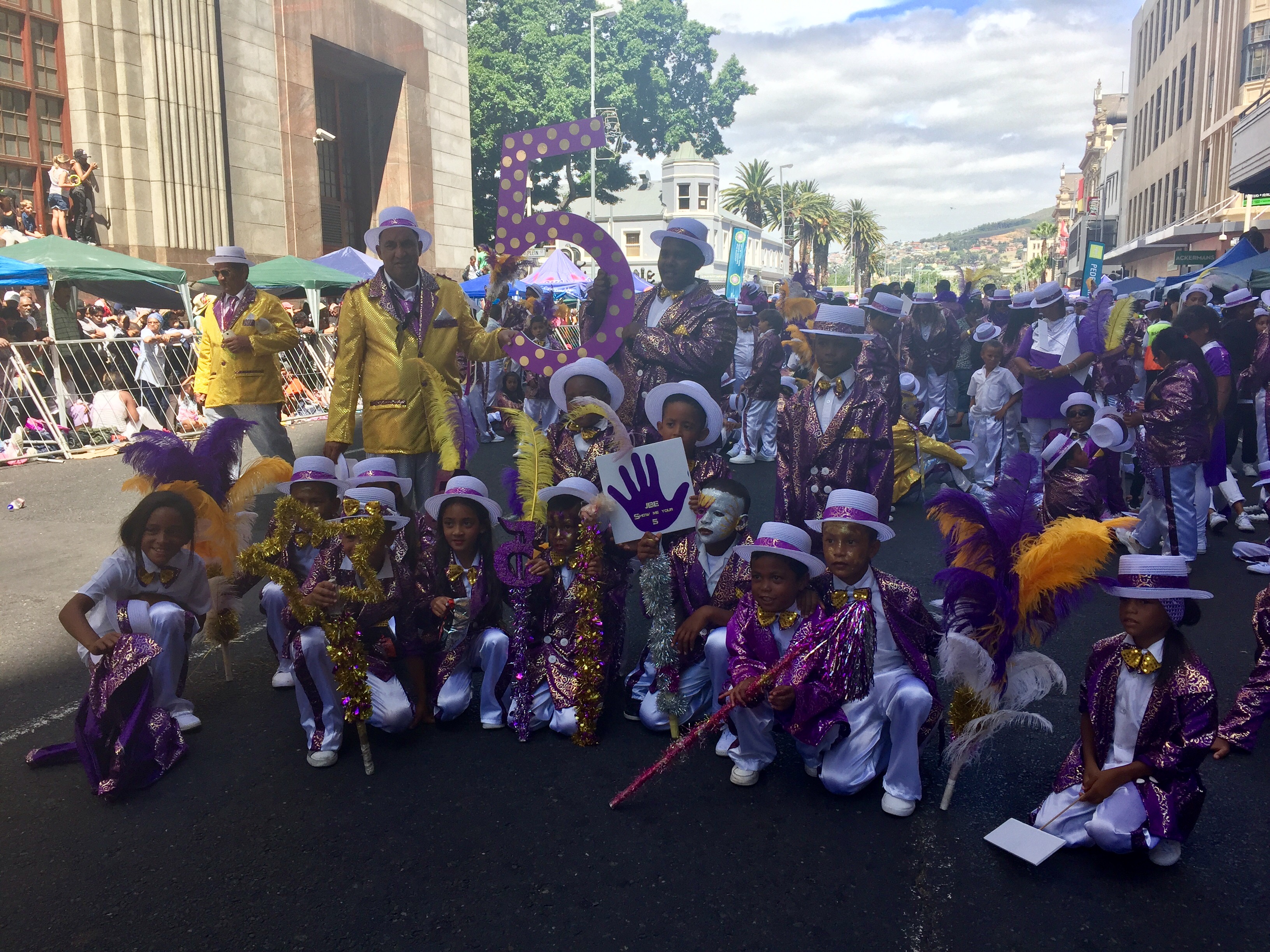
Two young members of the Juvie Boys.
The Juvie Boys celebrated their fifth year at the minstrel march.
A young minstrel looks bewildered as he marches through the parade.
“If I was personally committed to enforcing decolonisation, science as a whole is a product of western modernity and the whole thing should be scratched off.
“If you want practical solutions to decolonise science, we would have to restart science from an African perspective; from our perspective of how we’ve experienced science.”
These are quotes from a student attending a University of Cape Town (UCT) Science Faculty meeting with members of the ‘Fallist’ movement on 12 October. #ScienceMustFall began trending on 14 October, after a YouTube video from the meeting went viral and was ridiculed on social media.
The member of the ‘Fallist’ movement continues by describing how rural people in KwaZulu-Natal believe that black magic can be used to “send a lightning” to strike someone. She asked the audience to explain that scientifically, but this was met by laughter.
Decolonised education is a phrase that has been bandied about recently by students, but what does this actually mean? What does a decolonised university look like?
What is decolonised education?
Tabisa Raziya (22), a Bachelor of Social Science student at UCT and former #FeesMustFall member, believes that decolonising education is taking everything as it stands, the curriculum, culture and institutional values of education, and changing the face of it.
“It’s about restructuring the way it’s taught, what we’re taught and who we’re taught by.
“Decolonisation means making education more Pan-Africanist. So, the ideals of afro-centrism are promoted in the curricula and academics of colour become heads of departments and vice-chancellors.”
Raziya explains that decolonising education means reflecting a post-colonial intellectual space instead of one that reflects western and colonial values. She believes it should reflect the current demographic in South Africa.
A statement, released by the Fees Must Fall movement on 26 October, said that #FeesMustFall is a demand for “a free decolonised, Afro-centric education”. “This call is rooted in the liberation of black people and the total dismantling of the anti-black system that maintains black oppression.
“Fees Must Fall is an intersectional movement within the black community that aims to bring about a decolonised education. This means that the Fees Must Fall movement is located as a part of the larger struggle to eradicate the western imperialist, colonial, capitalist patriarchal culture.”
According to Athabile Nonxuba, a UCT student who spoke to News24, decolonisation includes the development of African interests, rather than Eurocentric ones, and an African education. “Eurocentrism does not serve our interests culturally, socially, economically. It does not resolve the issues of Africa.”
Nonxuba explains that decolonised education can only be introduced if the current system is overthrown and the people it is supposed to serve define it for themselves. “We want to review the system and curriculum, and that can’t happen without a decolonised institution.”
PHOTOS: Students gathered outside of Parliament on 7 October 2016 to hand out pamphlets to passers-by. They hoped to further and deepen the debate on the possible next steps for the free education movement by engaging with passers-by. All photos by Saarah Survé.
Students gathered outside of Parliament on 7 October 2016 to hand out pamphlets. They hoped to further and deepen the debate on the possible next steps for the free education movement by engaging passers-by. PHOTO: Saarah Survé
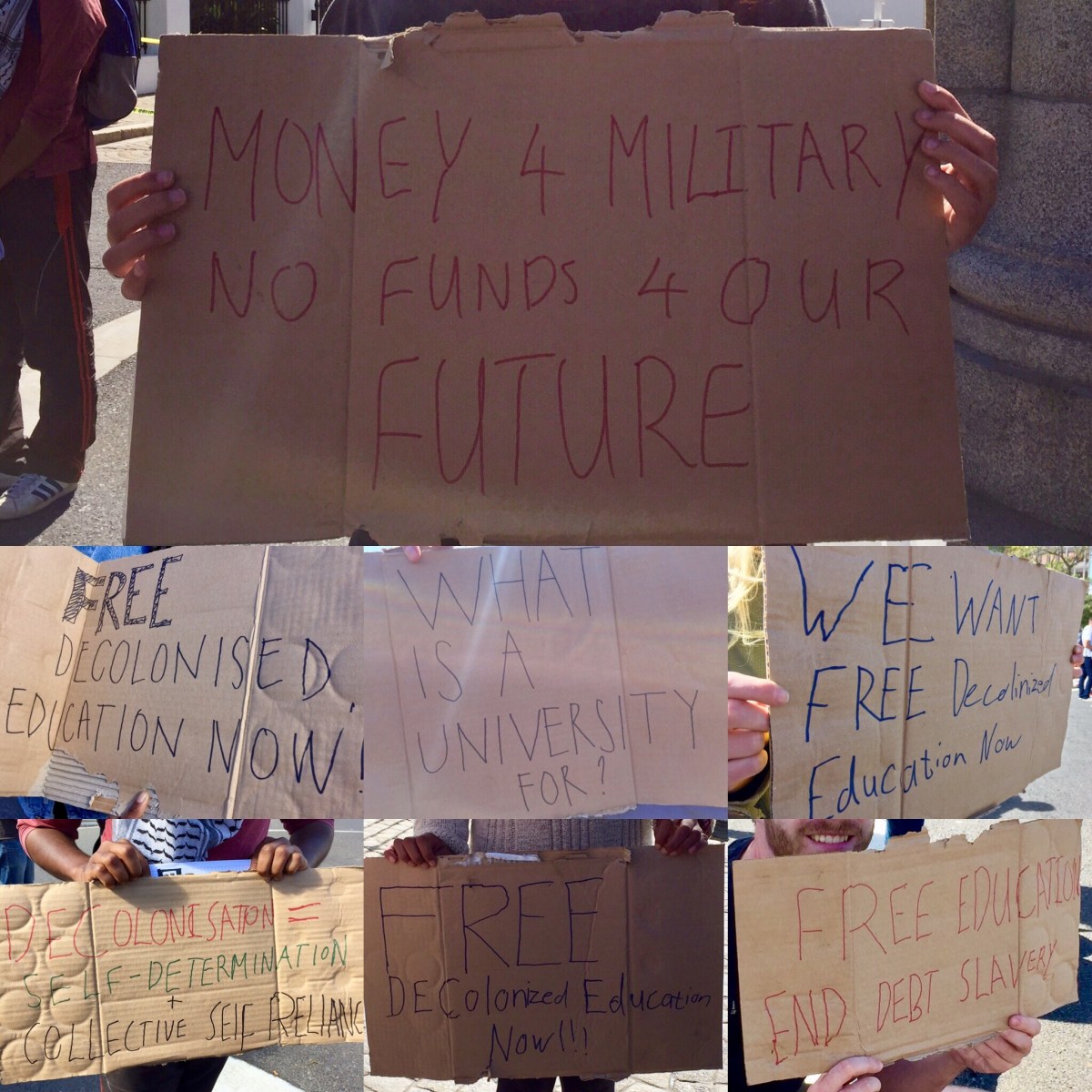
A UCT student holds a sign which says “Money for military. No funds for our future”. She was standing outside of Parliament hoping to engage passers-by to further and deepen the debate on free education. PHOTO: Saarah Survé
A UCT student holds a sign calling for “free decolonised education now”. She was standing outside of Parliament hoping to engage passers-by to further and deepen the debate on free education. PHOTO: Saarah Survé
A UCT student holds a sign calling for “free decolonised education now”. She was standing outside of Parliament, with other students, hoping to engage passers-by to further and deepen the debate on free education. PHOTO: Saarah Survé
A UCT student holds a sign calling for “free decolonised education now”. She was standing outside of Parliament, with other students, hoping to engage passers-by to further and deepen the debate on free education. PHOTO: Saarah Survé
A UCT student holds a sign which says “Free education. End debt slavery”. He was sitting outside of Parliament hoping to engage passers-by to further and deepen the debate on free education. PHOTO: Saarah Survé
A police officer looks down at a sign that a UCT student is holding, outside of Parliament, on 7 October. The sign reads: Free education. End debt slavery. He was hoping to engage passers-by to further and deepen the debate on free education. PHOTO: Saarah Survé
What does colonised education look like?
Raziya recalls sitting in a politics class at UCT in her first year. “I’d never read any of the articles in my course reader before. They were written in Old English and jargon. It did not reflect the politics of the time and I felt that the opinions were based on western ideas of politics.
“Politics is such a pivotal subject in terms of contributing knowledge. That was the first time I felt that even though I went to a Model C school, English was my downfall, because I couldn’t agree with the arguments when I knew that they were anti my belief system.”
Nonxuba explains that students are not introduced to new ideas by Africans, but instead the work of Europeans is offered as a standard in the classroom.
Nonxuba believes that black students are dehumanised by the current curriculum. “We study all these dead white men who presided over our oppression, and we are made to use their thinking as a standard and as a point of departure.”
Suellen Shay, dean and associate professor at UCT, agrees that this is one of the fears of the decolonising movement. “Curriculum content is dominated by – to name some – white, male, western, capitalist, heterosexual, European worldviews.
“This means the content under-represents and undervalues the perspectives, experiences, epistemologies of those who do not fit into these mainstream categories.”
Raziya agrees that the space wasn’t provided to talk about topics such as politics, race, rape, gender and sexuality outside of the media studies department’s hetero-normative and western frameworks.
“If we spoke up, the lecturers and tutors would pull us aside and tell us we were making noise. The one narrative that was given was not open for discussion.
“I felt that they were silencing black and queer voices and anything counter-argument to this idea that everything is fine and that we should all just be grateful that we are at UCT.
“UCT is suffocating, because I feel I have to leave a part of me at home just to be taken seriously. I have to speak more English than Xhosa in order to survive.”
Shay says that despite all of the talk about decolonising the curriculum, there has been little change, but that this is understandable. “Statues fall, fees fall, but curricula don’t ‘fall’,” she explains.
According to Shay, the risk of not having a clear strategy on how to decolonise education is that “the curriculum will look no different in 2020 than it does in 2016”.
VIDEO: On 7 November 2016 students hosted a #FeesMustFall Poetry Evening in Cape Town. It was a space to share poems, music and thoughts. See a video of the event below.







 Saarah Survé