
Pityana reflects on legacy of Biko and black consciousness

13 September 2016

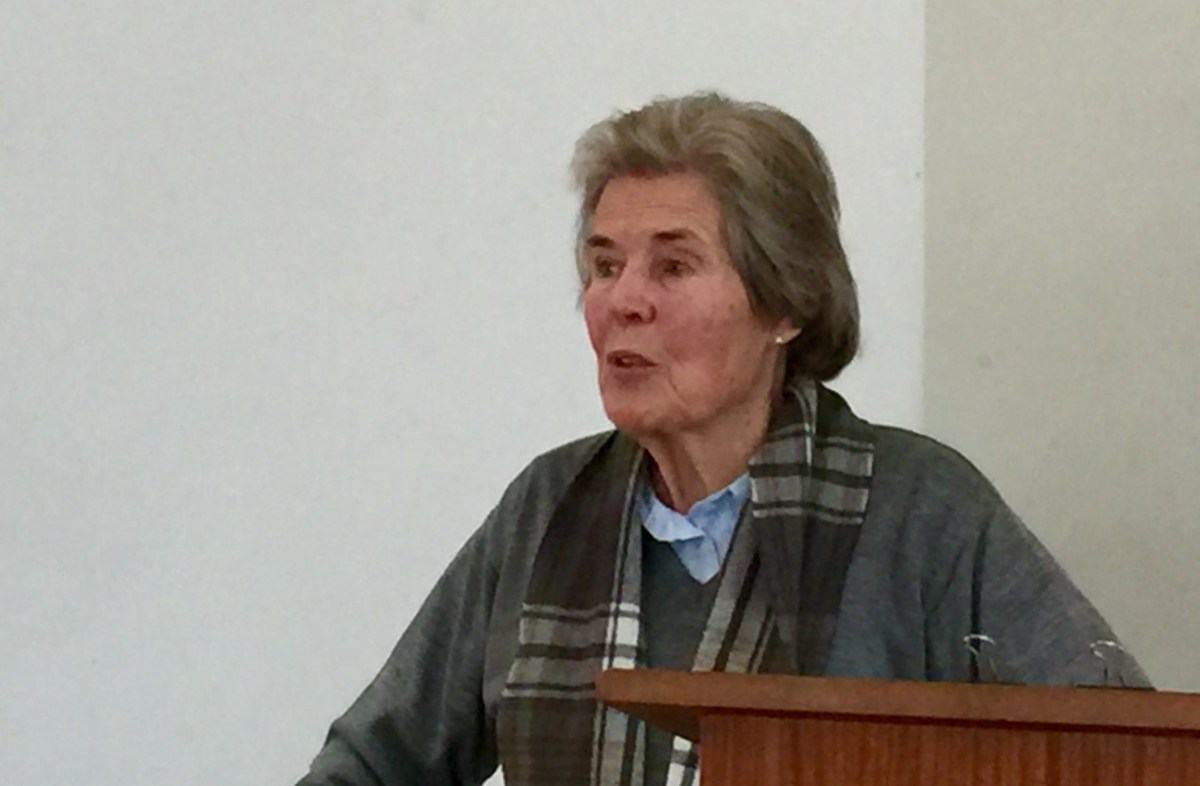
Stellenbosch University – Professor Nyameko Barney Pityana (71), professor emeritus of law at the University of South Africa and president of the convocation at the University of Cape Town, said South Africa is missing out on a society of intellectuals and the promotion of a thinking society, without black consciousness.

“Why is it that there is so much interest at an intellectual level in Steve Biko, but very little evidence in society in general and public life of his influence?” asked Pityana, as he addressed students and staff at Stellenbosch University (SU) on Tuesday, the day after the anniversary of Steve Biko’s death.

Pityana was a founding member of the South African Students’ Organisation and an important figure in the Black Consciousness Movement with Biko.

Pityana said that he wished black consciousness was becoming a tool for conversation and for understanding South African society today. “I wish it was a tool for framing much of what we are doing in South Africa today, for framing the new humanity which we are pursuing and what our constitution is actually about, for recognising that there is no future in the unequal society that we are today. There is no future in a society that has large numbers of poor people. There is no humanity in a society that is racist.”

Pityana said that neo-colonialism, neoliberalism, individualism and greed have destroyed the humanity of South Africans.

“The current government of the African National Congress lacks an intellectual frame in which it can move South Africa forward,” said Pityana, who, in an open letter written in 2013, asked President Jacob Zuma to resign.

“Black consciousness could affect leadership and values. It would provide leadership with tools for assessing what the appropriate values that we need in our society are.”

Pityana noted that there is “a growing influence and articulation of black consciousness, a growing readiness on the lips of many, particularly young people and scholars, and a growing number of studies that are being done on Steve around the world.”

Biko’s grandson, Avela Biko (19), who is in his first year of a Bachelor of Arts degree at SU, was also in attendance. He said that, as a young South African, it was overwhelming growing up with the knowledge that Steve Biko was his grandfather. “I never got the chance to meet him. It was always hard to hear things about him, but it’s been a pleasure growing up, getting more information and getting to know him. It’s a privilege to be his grandson, because he did a lot for the country and his influence is still felt today.”

See more of Pityana’s presentation below:
Now is the time for white people to listen and learn

Monday, 15 August 2016

Saarah Survé

Stellenbosch University – Mary Maria Burton (76), former president of the Black Sash and a commissioner on the Truth and Reconciliation Commission (TRC), said that it is time for white people in South Africa to listen to and learn from black people.

Burton made this comment when she addressed honours students from Stellenbosch University’s journalism department.

“I said that it’s time for whites to shut up,” said Burton referring to a recent interview. “I think what I meant is that even today we tend to have opinions and speak them, especially those of us who were opposed to the previous government and were accustomed to fighting for a space. I think it’s time to listen, more than talk. It’s time to learn, more than teach.”

Zenariah Barends, head of investigations for the TRC in the Western Cape, worked closely with Mary Burton during the TRC process. Barends spoke about Burton with great admiration. “She was amazing, a wise woman who I had an incredible amount of respect for. She was never arrogant or boastful. She was very mild-mannered. She always listened. She was someone that you felt you could actually talk to. ”

Barends agreed that those who have benefitted from apartheid need to listen and not be defensive. “They should in fact heed to the words of someone like Mary Burton.”

Burton explained that South Africa’s western bias does not allow for a diversity of opinions and ways of settling disputes that are traditionally available in South Africa. “It does not leave space for learning from one another.”

Although Burton said that the Black Consciousness Movement isolated the Black Sash, her sentiments are not in opposition to what Steve Biko, the founder of the movement, expressed in his book, I Write What I Like.

Biko was against the “superior-inferior, white-black” divide that made the white person a teacher and the black person a student. Biko was also “against the fact that a settler minority should impose an entire system of values on an indigenous people”.

Allister Sparks, in his book The Mind of South Africa, wrote that Biko believed in the primary necessity of “blacks to emancipate themselves” so that “they could deal with whites on equal terms in their own minds: otherwise the inequality would continue, with whites calling the tune and the blacks following submissively”.

Burton alluded to this when she asked: “Can we sufficiently sit back and not say ‘yes, but…’ when people tell us things?” She said that South Africans have a fantastic opportunity ahead of them if they learn to listen.

“I see signs of great courage among young people now, whose parents were exhausted and also felt that they could not betray the cause by criticising their leaders,” said Burton. “I think that has changed and I hope that we have not left it too late and that this next generation is going to bring about the change.”