Moonisah’s Story: From the Mother City to Mangochi

Moonisah Namata was born in Cape Town, South Africa, to Malawian immigrants. A year ago, her parents took her back to Malawi to live with her aunt and uncle.

The Mother City to Mangochi

Four years ago, I interviewed Oscar Haj Namata (45), a Malawian who had been living and working in Cape Town (the Mother City) since 1996. At the time of the interview, Oscar and his wife, Mabel, expressed the wish that their two-year-old daughter, Moonisah, would have a better future in Cape Town, where she was born. Recently, I discovered that they had sent Moonisah (now age 6) to Malawi to live with Mabel’s sister.
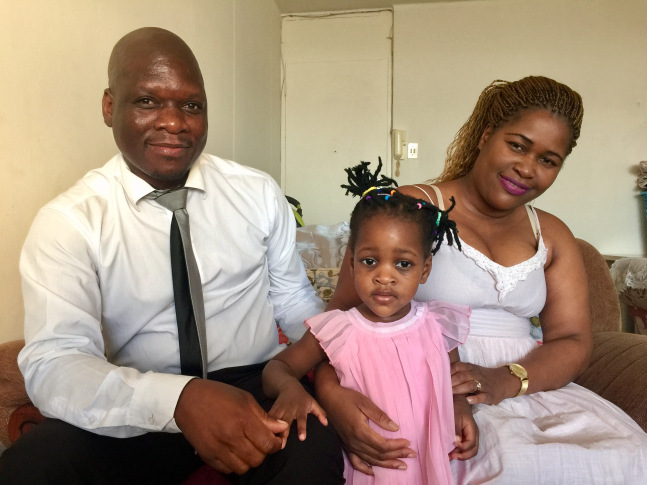
Oscar and Mabel with their daughter, Moonisah, age 2, in Cape Town, South Africa, 2016

Both Oscar and Mabel are employed at the same company as driver and receptionist, respectively. As driver to the CEO, Oscar’s hours are unpredictable, and it was becoming difficult for him to fetch Moonisah from school, and public transport in Cape Town can be unreliable and unsafe. The decision to send her home was not made lightly, as Oscar explains:

“Sometimes I had to leave her alone in the house and run back to the office quickly before anyone noticed. That was not easy for us. Anything can happen and we always find out too late and we cannot blame anyone.

We had no choice but to send her home.”

Oscar Haj Namata

The last time Oscar saw Moonisah was in September 2019 in Malawi. Mabel’s sister decided it would be best for them not to communicate with her for the first three months so that she could adjust to her new life. “She didn’t know where we were until we gave her the first video call. She didn’t say anything. The tears were just dropping.”
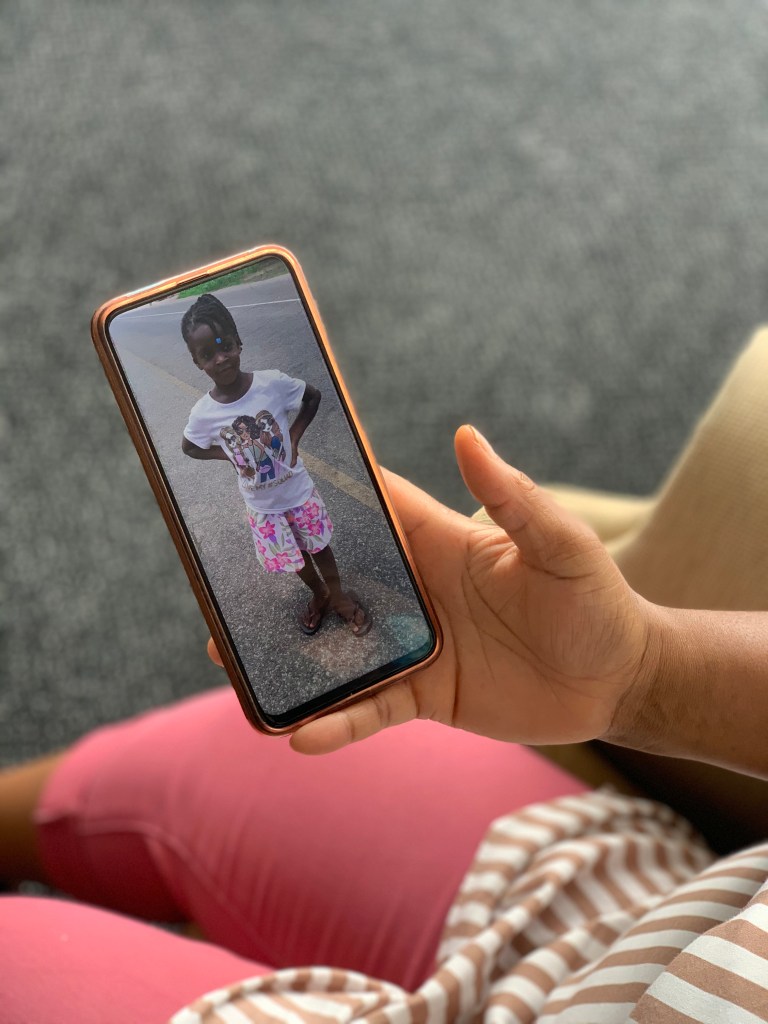
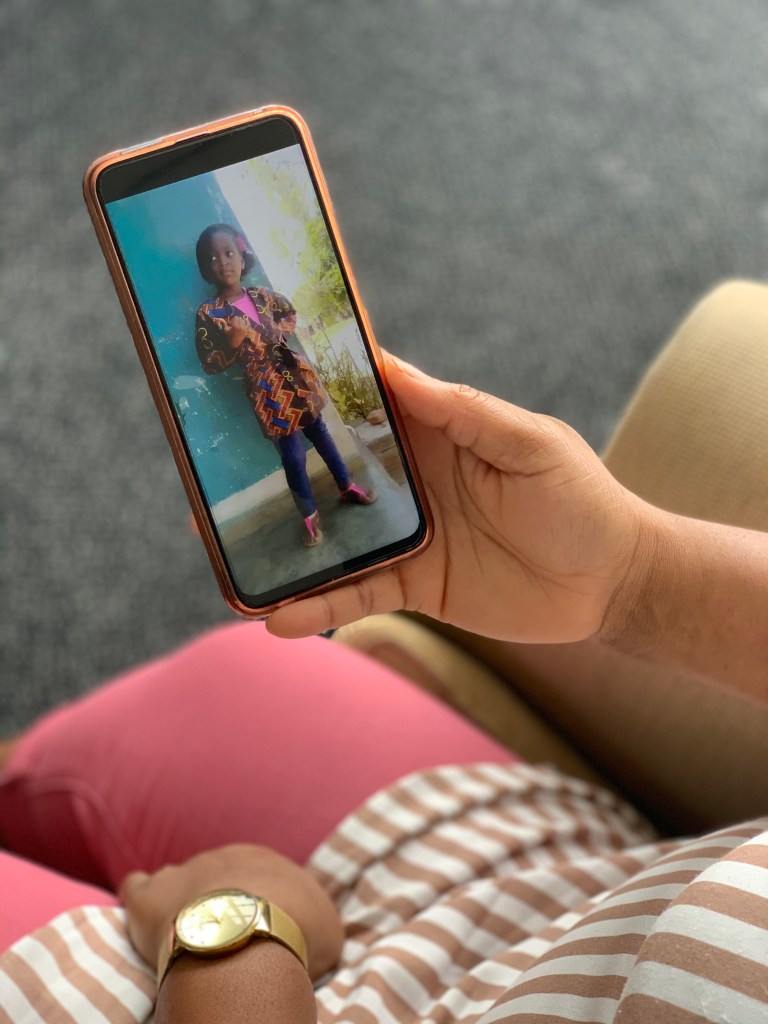
Now they speak almost daily on WhatsApp via voice notes. Moonisah speaks English to them, because she thinks that her parents don’t understand Chewa. Although it is difficult for them to be away from her, they believe that she is safe and well-looked after, since Mabel’s brother-in-law is a school teacher and they live on campus.

Oscar will be visiting Moonisah in December. She is excited for his visit and the South African chocolates and ice cream that he will bring. He wants her to return to South Africa in a few years’ time when “she can take taxis by herself”.

Although Moonisah was born in South Africa, she is not a citizen. According to Oscar, her birth certificate shows she is a foreigner, but he hopes that “one day she will be able to go to Home Affairs and get that citizenship”.

Read Oscar’s story here
Oscar’s Story: From Mangochi to the Mother City

In 1995, Oscar Haj Namata first travelled to South Africa from Malawi as a teenager to sell curios. Twenty-five years later, he has lived through five South African presidents.

Mangochi to the Mother City

In 1995, Oscar Haj Namata frequently travelled from Malawi to South Africa with his uncle to sell curios. His uncle had encouraged the then 19-year-old to get a passport so that he could learn the business. “His focus was on showing me … the routes to take, how it works on the borders … to open my eyes. That’s why I stuck with him,” explains Namata. However, when Namata met up with school friends who had settled in Johannesburg, he aspired to their lifestyles. When he saw the small black and white televisions in their rooms, he says that he knew that was what he wanted, but he was not earning much working for his uncle.

“At the end of each trip, his thank you was LUX soap or tea bags. It was never money. Soap, soap, soap …” Namata laughs. He decided to work in South Africa on his own terms and moved to Cape Town (the Mother City) from Mangochi. “The place I was feeling safe and where I would be welcomed was Cape Town with my sister.” Namata worked in a grocery store for a few years, before becoming a driver.

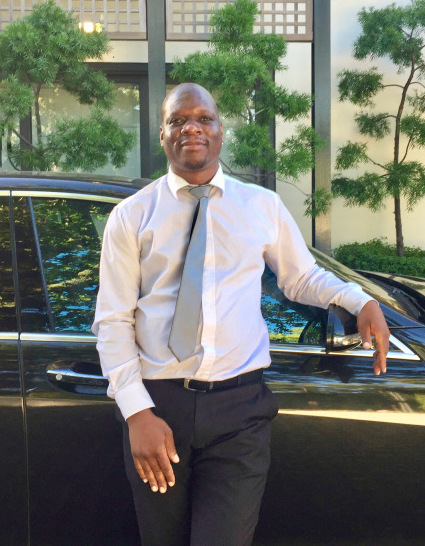
Oscar Haj Namata in Cape Town, South Africa, 2016

Namata was born Haj Namata, but chose the name Oscar when he was in primary school. “I remember very well … like yesterday (he laughs). My close friend, who was in high school, thought I resembled someone he knew called Oscar. He wanted to call me Oscar. I liked it immediately. I changed everything. I used it until people didn’t know my other name, Haj. Only my parents. Haj comes from my great-grandfather. My father’s surname is Namata Haj. I found it [Haj Namata Haj] awkward … it didn’t sound nice. That’s why I was so quick to accept the other name. Oscar Haj Namata. I take all of them. Officially changed. Everyone knows Oscar.”

Although Namata has been in South Africa for 25 years, he sees himself retiring in Malawi. “I cannot think [about it] twice. One day, I know I will get tired and mature. I will … need to go home and do something else, whatever it is. If there is money, I can decide to start something. Maybe in the next five years. That’s only a wish. I’m not really sure. I will be 50. It’s time for retirement.”

For now, Namata is very happy in Cape Town. “You see, I had no this (points to his stomach). I always remember my first time I came, I weighed 52 or 56 kilograms. Now I’m talking about 100 [kilograms]. That means I’m happy. The stress is very little.”

Namata prides himself on understanding Xhosa. “The belief is that when you are staying in a foreign country, you must try to adopt certain languages. Just a little bit. In order for them to welcome you. Even if it’s just greetings: Molweni (hello), kunjani? (how are you?). It helps. I believe that.”

Namata counts on his fingers that he has been in South Africa for five presidents: “Mandela, Mbeki, Motlanthe, Zuma and Ramaphosa. I wish I had nice documents, so that I could tell you straight away: ‘I’m here to stay’.”

Oscar Haj Namata in Cape Town, South Africa, 2020. Photographs of Nelson Mandela are behind him.

I asked Namata if he eventually bought his own black and white television. “I have more than that. I came to South Africa when there were no cell phones. If there was, only certain people had. After I got my first cell phone, I immediately wanted to go home … Thinking I had everything (laughs).” He recalls that it was a Nokia with an aerial. “I can even remember the ringtone (sings ringtone). Now I’m not talking about TVs and small things. I want a Toyota bakkie. One day, when I go home, I can drive to Malawi and put whatever I got in the bakkie and go.”

Read about Namata’s daughter’s journey here

From Pollsmoor to a parking lot: the story of Attie van der Merwe

“If you forget my name, just think of Tolla van der Merwe, but I’m just Arthur van der Merwe… you can call me Attie.”

3 August 2016

Janie Du Plessis and Saarah Survé

Another lost soul forgotten by society and left to wander the streets of Stellenbosch. To passers-by he is invisible. Nobody stops to talk to him.

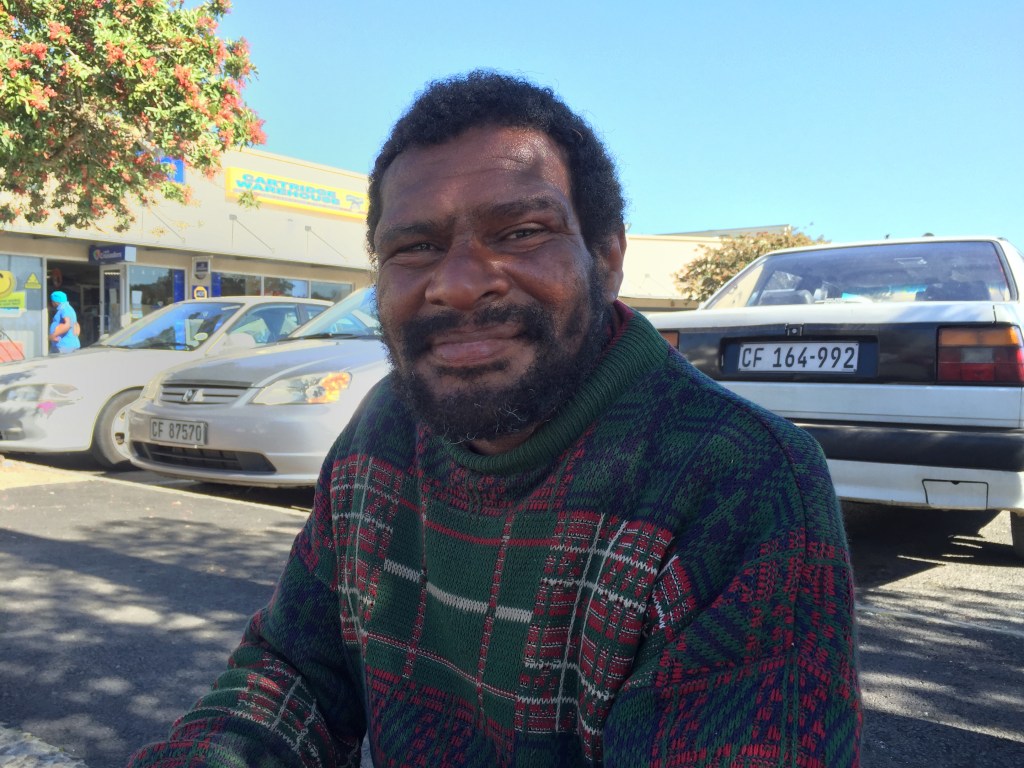
Arthur Nico van der Merwe, 45, sits with his legs spread out in the middle of a parking lot in Andringa Street in Stellenbosch. He is staring at his hands. His left ankle looks twisted as it lies at an odd angle, his foot peeking out of his black, broken boot. The rubber soles have detached themselves from the boot and his black and white laces are untied.

He sighs audibly. “I’m not having a good day. I’m so hungry.”

He has permanent frown lines which have been etched onto his forehead. But his eyes are sparkling and his kind face is covered by a black beard, peppered with grey hairs. His two front teeth are missing.

IMG_5107
Arthur van der Merwe waits for his brother in a parking lot in Andringa Street.      Photo: Saarah Survé

Arthur was released from Pollsmoor Maximum Security Prison in Cape Town two days ago, after one year as an inmate.

“God put me in jail. I had to go to prison, because I broke the law. I did the things that I must do.” He pauses, but does not explain further.

“I’m sitting here waiting for Edward, my brother. He is supposed to pick me up today. He didn’t come yesterday, but I know he will come today.”

Arthur stares at his hands again. His fingernails are long and sharp. Black dirt has built up underneath them. They look like they could be used as a weapon. His hands are scarred and caked with brown dirt. He holds tightly onto the chocolate muffin in his hand.

“As long as I am out of prison, I’m happy. Pollsmoor is a horrible place. It is so boring there, there is nothing to do,” he says.

Arthur used to work at a tyre-swop company in Cloetesville before going to Pollsmoor. Now he works at Stellenbosch Provincial Hospital where he washes the hospital’s cars.

Before taking a bite of his muffin, he says: “I have to work at the hospital, because I have to make money. When I have money, I can buy food.”

Little crumbs of muffin get stuck in his beard and more fall to the ground. When he takes the last bite, he wipes his fingers onto his faded blue jeans already dusted with dirt.

“Most of the time I buy food, but sometimes I buy wine. Wine makes me warm when I sleep and it makes my chest feel better,” he says, as he pretends to drink from an imaginary bottle.

His dark green and red jersey appears to be too big. Threads hang off the jersey and there’s a hole in the fabric in the middle of his chest.

“In the winter it’s not nice here. When it rains I sit in this parking lot. I sit in the rain, but I pretend like I don’t get wet and cold, because there is nothing I can do about it.”

He rolls the letter “r” when he speaks and speaks comfortably in both English and Afrikaans. He switches between the two with ease.

IMG_5108
Arthur van der Merwe waits for his brother in a parking lot in Andringa Street.      Photo: Saarah Survé

“You know, the devil got in me… He told me to take my wife away… I buried her myself.”

Arthur suddenly cringes at this thought and twists his foot all the way out of his shoe.

“I did what I had to do; I took her away because she made love to my brother. I told my brother as well, I told Johan that I will kill him too.”

It seems like the betrayal by his wife, Synobia, still bothers him today. “I married her for life. My brother sleeps around with lots of women, he could have left mine alone,” he says, looking away.

“Anyway, I have a new woman now.” The sudden change in subject indicates that he is finished talking about Synobia.

For the past two nights, Arthur has slept in the doorways of local shops.

“The police won’t chase us away when we sleep there, they want to help us,” he says.

Even though the police do not bother Arthur, it’s the way other people treat him that troubles him most.

“Some people look at me in a funny way, but then they just walk past. They don’t ask questions and they don’t give answers. But if they want to be like that, it’s better that they stay away. Then the devil also stays away.”

Arthur thinks to himself and plays with the muffin paper in his hand.

“If you forget my name, just think of Tolla van der Merwe, but I’m just Arthur van der Merwe… you can call me Attie.”