Ducks earn their keep at Vergenoegd

27 September 2016

Look no further than Vergenoegd wine estate for a lazy day of basking in the sun and tantalizing your palate, but don’t miss the duck parade. 

As you take the Baden Powell Drive exit off the N2, it is easy to miss the entrance gates adorned with white plaster ducks. From there, an equally unassuming gravel road will lead you to Vergenoegd wine estate, the gateway to the Stellenbosch Wine Route.

A sign reads “Please drive slowly. Duck parade ahead.”
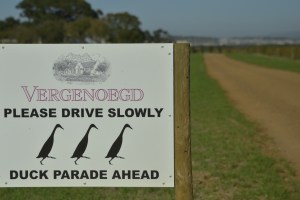
vergenoegd
A sign at the entrance to Vergenoegd wine estate reads “Please drive slowly. Duck parade ahead”. PHOTO: Mary Lamontagne

On arrival I am greeted with rosé champagne, “pink in colour because it has been darkened with red grapes,” explains Marlize Jacobs, the resident winemaker. Jacobs studied winemaking at Elsenburg College in Stellenbosch.

In 1696, Simon van der Stel, governor of the Dutch Cape Colony, granted the farm to Pieter de Vos, who named it “Vergenoegd” which translates to “satisfaction has been achieved”.

In 1862, the estate was purchased by Johannes Gysbertus Faure whose family owned it for six generations.

One of the oldest farms in Stellenbosch changed hands in 2015 when new life was breathed into it.

file_005
The vineyards at Vergenoegd wine estate, which is on Baden Powell Drive.  PHOTO: Saarah Survé

At Vergenoegd, you can order a picnic lunch to enjoy on the lawn (prices range from R125 to R450) or book a seat at the long harvest table (R250 pp) and share a meal, prepared by Chef Ryan Shell, with unfamiliar faces. In winter, the harvest table is moved inside the wine cellar.

I take my seat at the harvest table under the oak trees, next to two young women from Montreal. The concept of breaking bread with strangers is a fun way to meet new people. We exchange contact details before the end of the meal.

2016-04-10-12-10-07
People enjoying lunch at the harvest table at Vergenoegd wine estate. PHOTO: Mary Lamontagne

Shell, who trained at the Cordon Bleu Cookery School in Johannesburg, welcomes us and explains that we will be eating family-style. This means that all of the dishes are put onto the table so that we can serve ourselves. He also mentions that we should not miss the ducks at 3:30pm.

Shell, who previously worked at Haute Cabrière in Franschhoek, uses the produce grown in his own garden at Vergenoegd in his cooking.
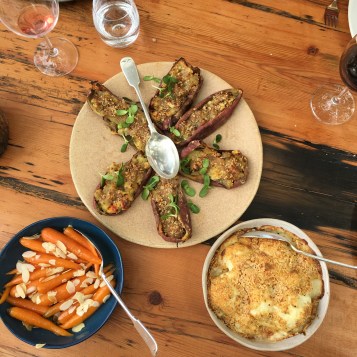
2016-02-20-13-52-39
Vegetables from Chef Ryan Shell’s garden served family-style for lunch. PHOTO: Saarah Survé

He personally brings dish after dish to the table, including duck pâté and a whole fish, each served on beautiful ceramics paired with wine from the estate. Each dish is presented with pride and it is evident that the chef treats his products with the utmost respect.

2016-02-20-14-34-17
Dessert prepared by Chef Ryan Shell served family-style. PHOTO: Mary Lamontagne

“Vergenoegd”, I sit back, slip my feet out of my sandals and wiggle my toes through the dried peach pips, a clever and sustainable way to decorate the ground.

After our three-course lunch, we are invited into the Cape-Dutch manor house to choose one of the four blending experiences: coffee, tea, wine or olive oil. We are reminded once again not to be late for the ducks.

At the coffee blending experience, we are tasked with creating the perfect cuppa with coffees from Uganda and Ethiopia, presented in square silver tins. With small wooden spoons we scoop mounds of the Bugiso, Sippi Falls and Sidamo into French coffee presses and soon the strong aromas of coffee fills the room.
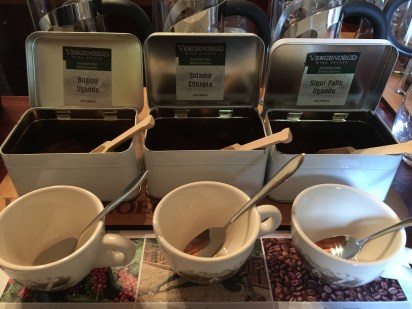
file_001-2
Three types of coffee arranged for the coffee blending experience at Vergenoegd. PHOTO: Saarah Survé

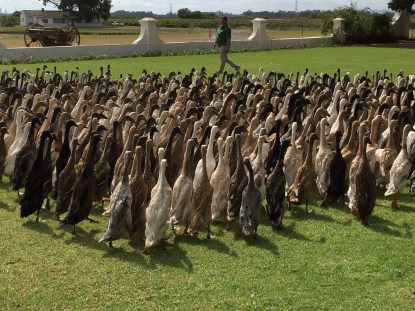
About 30 minutes into our blending experience, we are ushered out of the manor house and onto the lawn. The distant sound of quacking grows louder until we can hardly hear each other. Puzzled searching reveals a flock of about 1 000 Indian Runner Ducks determinedly waddling from the direction of the dam. The ducks, which are domesticated, stand erect and, like penguins, cannot fly.

Herded by a man in the back and a woman in the front, almost as if they are in an invisible enclosure, moving as one unit, the ducks make their way past us, leaving a trail of small feathers in their wake.

One slightly dishevelled duck tries to make a beeline back to the dam, but jumps back into line, after his path is blocked.
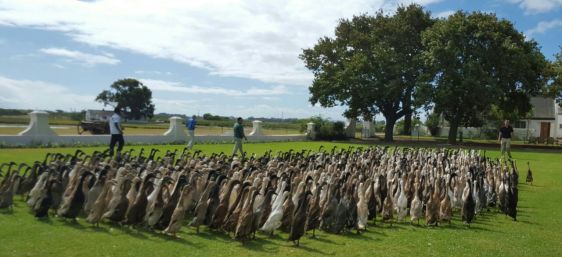
file_000-3
The Indian Runner Ducks parade through Vergenoegd wine estate. PHOTO: Saarah Survé

The wine estate uses the ducks to help with natural snail and pest-control in their vineyards. The estate has been refining this practice since 1984.

The ducks work on alternate days and are herded back and forth from the dam or vineyards to their enclosure in the morning and evening.
file_000-4
The Indian Runner Ducks parade through Vergenoegd wine estate. PHOTO: Saarah Survé

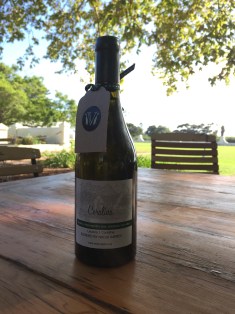
Then back to the coffee blending. If you enjoy the blend of coffee, tea, olive oil or wine that you make, it will be packaged and personalised for you to take home. You can even re-order your blend in the future, because every custom blend is stored in the Vergenoegd library.
file_002
Here is a custom belnd of olive oil which has been packaged and personalised . PHOTO: Saarah Survé

According to their website, every Saturday the wine estate hosts a market from 10am to 4pm. In the summer months they host outdoor movie nights under the stars.

If you still aren’t convinced that Vergenoegd is the place to spend a lazy day, for the series aficionados, the television show Black Sails was partially filmed at Vergenoegd.

2016-02-20-15-30-59
The Cape-Dutch manor house at Vergenoegd wine estate. PHOTO: Mary Lamontagne

Here is a link to Vergenoegd’s website: http://vergenoegd.co.za/

Maties confident about reaching Varsity Cup finals

21 September 2016

Stellenbosch – Stellenbosch University’s netball team have won the last three rounds of the Varsity Cup season and Coach Christine Behan believes they can make it to the finals.

“I definitely believe we will make the semis as we should finish in the top four, but whether we go all the way to finals again depends on who and where we play the semis. That is our goal though and I believe we can do it. We have a great team and if our shooters are accurate, we are hard to beat,” said Behan.

Maties scored five consecutive goals within the first two minutes of Monday’s game against the University of Cape Town (UCT). Behan said it was their goal to lead 5-0 and start strong. Maties beat UCT 69-25.

Captain Juline Rossouw (24) attributes Monday’s success to sticking to the game plan. “It’s something that we have struggled with in the last few games. It was great getting it right in front of our home crowd. It’s very important to make a statement on court from the start. Nobody wants to start on the back foot.”

14364673_1402971049731857_2651218300107648304_n
Juline Rossouw (left), captain of the Maties netball team, in action during Monday’s game against UCT.                        PHOTO: provided by Juline, taken by Stefan Stander photography.

Maties will play the Vaal University of Technology (VUT) on Monday 26 September at 18:00 at Coetzenburg Indoor Centre.

“This will be a very important game for us to get up our scoring average, which might count in our favour going forward in this competition,” said Rossouw, who plays goal defence.

She added that the game against VUT will be a good opportunity to showcase some of the team’s younger players.

Behan said that the team will use the game to practise combinations that they want to use against the University of the Free State.

Maties play Kovsies on Thursday 29 September at Coetzenburg Indoor Centre.

“It will be our most difficult match, because that result will determine where we finish on the log and who we will play in the semi-finals. It’s a very important and a crucial match for us. We are still hoping for a home semi-final too,” said Behan.

North-West University’s Pukke beat Maties 50-37 in 2015’s final. Despite this, Behan has made minimal strategic changes this year.

“Once we know who we will play in the semis we will analyse that team and train according to our specific game plan for that specific match.”

Pityana reflects on legacy of Biko and black consciousness

13 September 2016

Stellenbosch University – Professor Nyameko Barney Pityana (71), professor emeritus of law at the University of South Africa and president of the convocation at the University of Cape Town, said South Africa is missing out on a society of intellectuals and the promotion of a thinking society, without black consciousness.

“Why is it that there is so much interest at an intellectual level in Steve Biko, but very little evidence in society in general and public life of his influence?” asked Pityana, as he addressed students and staff at Stellenbosch University (SU) on Tuesday, the day after the anniversary of Steve Biko’s death.

Pityana was a founding member of the South African Students’ Organisation and an important figure in the Black Consciousness Movement with Biko.

Pityana said that he wished black consciousness was becoming a tool for conversation and for understanding South African society today. “I wish it was a tool for framing much of what we are doing in South Africa today, for framing the new humanity which we are pursuing and what our constitution is actually about, for recognising that there is no future in the unequal society that we are today. There is no future in a society that has large numbers of poor people. There is no humanity in a society that is racist.”

Pityana said that neo-colonialism, neoliberalism, individualism and greed have destroyed the humanity of South Africans.

“The current government of the African National Congress lacks an intellectual frame in which it can move South Africa forward,” said Pityana, who, in an open letter written in 2013, asked President Jacob Zuma to resign.

“Black consciousness could affect leadership and values. It would provide leadership with tools for assessing what the appropriate values that we need in our society are.”

Pityana noted that there is “a growing influence and articulation of black consciousness, a growing readiness on the lips of many, particularly young people and scholars, and a growing number of studies that are being done on Steve around the world.”

Biko’s grandson, Avela Biko (19), who is in his first year of a Bachelor of Arts degree at SU, was also in attendance. He said that, as a young South African, it was overwhelming growing up with the knowledge that Steve Biko was his grandfather. “I never got the chance to meet him. It was always hard to hear things about him, but it’s been a pleasure growing up, getting more information and getting to know him. It’s a privilege to be his grandson, because he did a lot for the country and his influence is still felt today.”

See more of Pityana’s presentation below:

Now is the time for white people to listen and learn

Monday, 15 August 2016

Saarah Survé

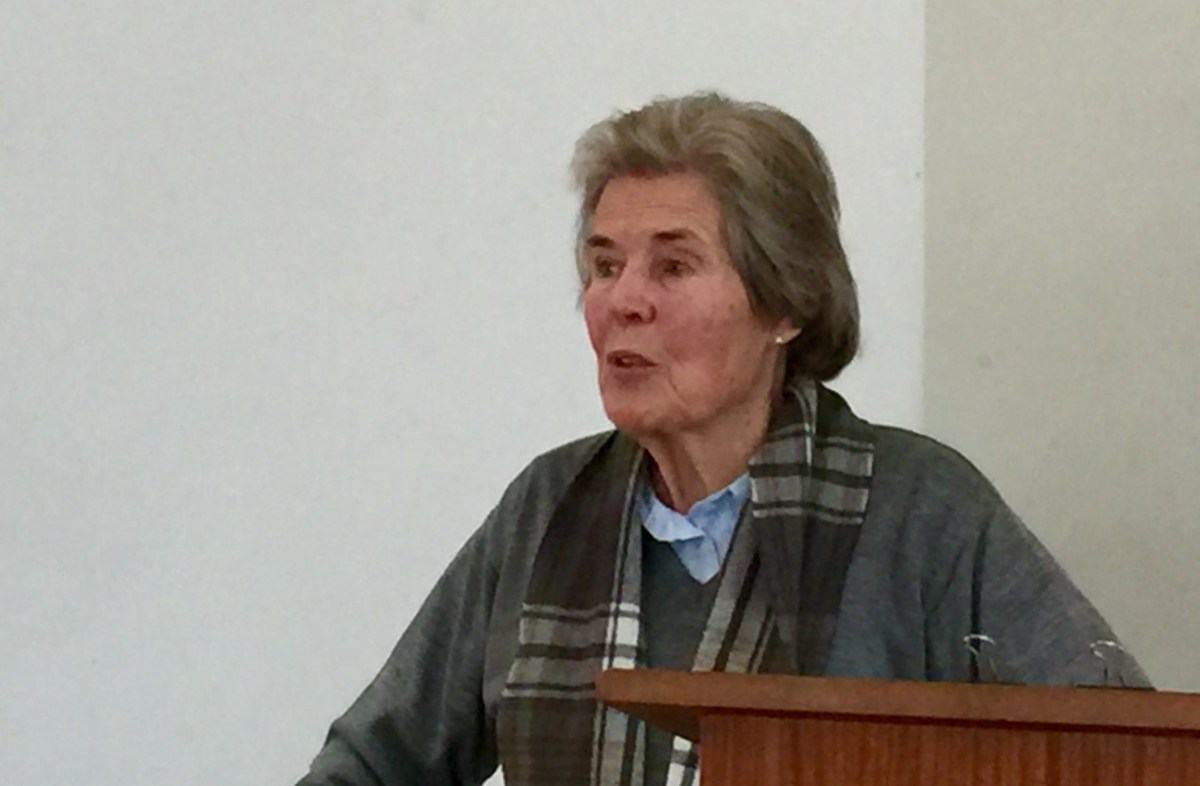
Stellenbosch University – Mary Maria Burton (76), former president of the Black Sash and a commissioner on the Truth and Reconciliation Commission (TRC), said that it is time for white people in South Africa to listen to and learn from black people.

Burton made this comment when she addressed honours students from Stellenbosch University’s journalism department.

“I said that it’s time for whites to shut up,” said Burton referring to a recent interview. “I think what I meant is that even today we tend to have opinions and speak them, especially those of us who were opposed to the previous government and were accustomed to fighting for a space. I think it’s time to listen, more than talk. It’s time to learn, more than teach.”

Zenariah Barends, head of investigations for the TRC in the Western Cape, worked closely with Mary Burton during the TRC process. Barends spoke about Burton with great admiration. “She was amazing, a wise woman who I had an incredible amount of respect for. She was never arrogant or boastful. She was very mild-mannered. She always listened. She was someone that you felt you could actually talk to. ”

Barends agreed that those who have benefitted from apartheid need to listen and not be defensive. “They should in fact heed to the words of someone like Mary Burton.”

Burton explained that South Africa’s western bias does not allow for a diversity of opinions and ways of settling disputes that are traditionally available in South Africa. “It does not leave space for learning from one another.”

Although Burton said that the Black Consciousness Movement isolated the Black Sash, her sentiments are not in opposition to what Steve Biko, the founder of the movement, expressed in his book, I Write What I Like.

Biko was against the “superior-inferior, white-black” divide that made the white person a teacher and the black person a student. Biko was also “against the fact that a settler minority should impose an entire system of values on an indigenous people”.

Allister Sparks, in his book The Mind of South Africa, wrote that Biko believed in the primary necessity of “blacks to emancipate themselves” so that “they could deal with whites on equal terms in their own minds: otherwise the inequality would continue, with whites calling the tune and the blacks following submissively”.

Burton alluded to this when she asked: “Can we sufficiently sit back and not say ‘yes, but…’ when people tell us things?” She said that South Africans have a fantastic opportunity ahead of them if they learn to listen.

“I see signs of great courage among young people now, whose parents were exhausted and also felt that they could not betray the cause by criticising their leaders,” said Burton. “I think that has changed and I hope that we have not left it too late and that this next generation is going to bring about the change.”

De Villiers reflects on challenging year at SU

Monday, 1 August 2016

Saarah Survé

Stellenbosch University – In just one year at Stellenbosch University (SU), the vice-chancellor, Professor Wim de Villiers, has experienced five of the six main areas of student protests.

These  include tuition, rape culture, black lives matter, decolonisation of the university and outsourcing and insourcing.

“I didn’t know what I was signing up for when I became vice-chancellor,” said De Villiers, as he addressed honours students from SU’s journalism department. “There is no textbook on how to handle student protests.”

De Villiers, who started his new position on 1 April 2015, said that his time at SU has been complex and challenging, but very rewarding. He joked with the students that perhaps he should not have started on April fool’s day.

De Villiers, who is a doctor, said that his background in medicine helps him to deal with the complex issues that he faces at SU.

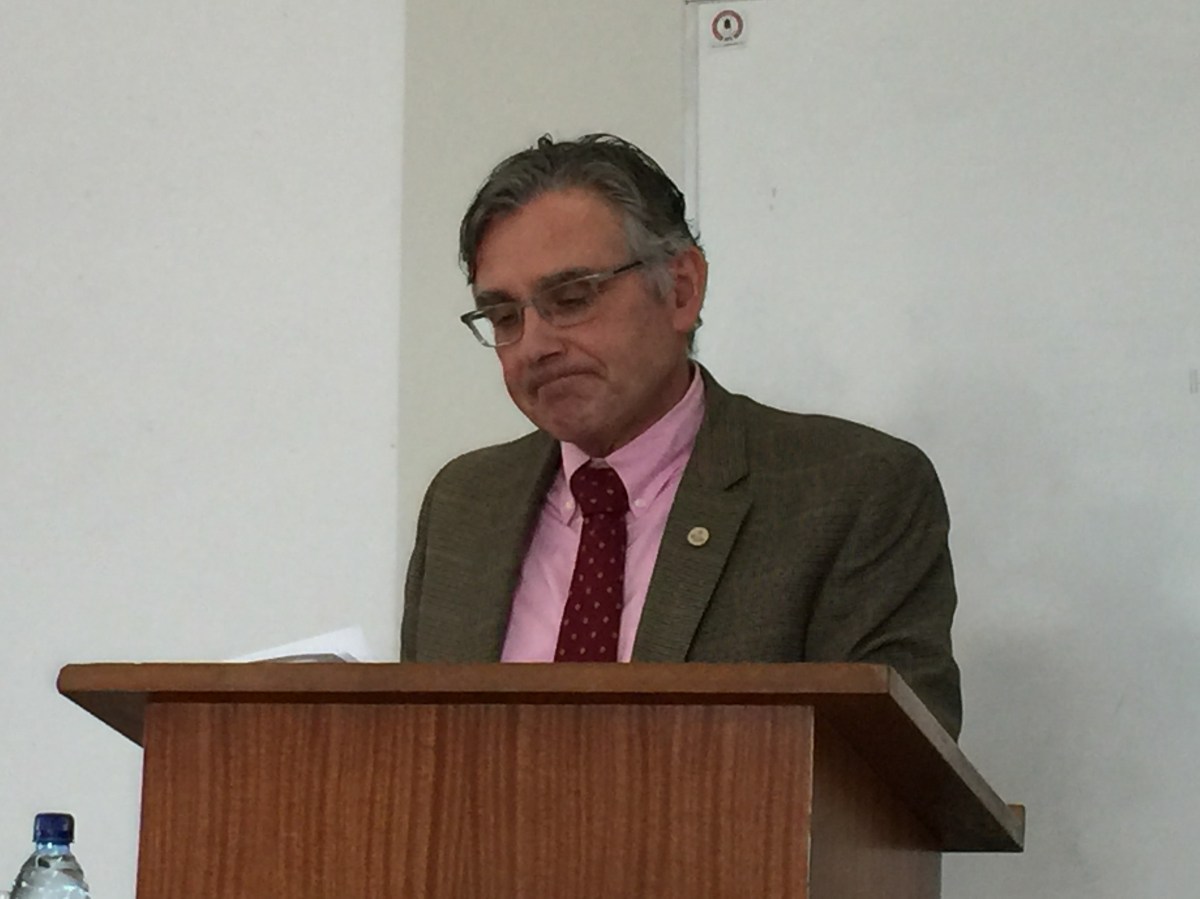
prof-wim-de-villiers-addresses-su-students-1
Prof Wim de Villiers addresses SU journalism students PHOTO: Saarah Survé

At one stage last year, De Villiers had to stop using social media, because of a hashtag that was making the rounds (#WimdeVilliersmustdie). He said that such a hashtag does not promote useful discussions, but that he is willing to engage with students.

When asked about transformation at SU, he responded by saying that “transformation is a complex issue”. He also said that transformation is a word which has lost all meaning. De Villiers does believe, however, that the university is being transformed.

De Villiers also addressed the issue of fee increases. Although De Villiers noted that students have been fairly quiet at the university lately, he is aware that an increase in tuition, which is inevitable, could spark more protests. “We cannot afford free education for all. As a country, we are not economically developed enough.”

De Villiers said that a sustainable university needs fee increases, but alluded to the poor being exploited in the event of no increase. “All that a 0% fee increase means is that the rich get a massive bargain and the poor suffer… It’s a perverse system.”

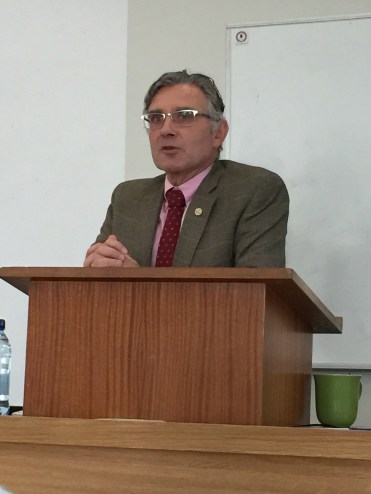
prof-wim-de-villiers-addresses-su-students-2
Prof Wim de Villiers addresses SU journalism students PHOTO: Saarah Survé

De Villiers’ advice to his successor would be to communicate. He said that whenever he thought he had communicated enough, he realised that he had not.